Ziegelprofil und Dachdurchführung: Warum die Passform entscheidend ist
Nicht jede PV-Dachdurchführung passt auf jedes Dach. Die Vielfalt an Ziegelprofilen in Deutschland ist enorm – und genau hier entscheiden sich Dichtigkeit, Montagegeschwindigkeit und Langzeitqualität einer Solarinstallation. Solarteure, die regelmäßig unterschiedliche Dächer bearbeiten, brauchen flexible Lösungen.
Die gängigsten Ziegelprofile in Deutschland
| Ziegelprofil | Verbreitung | Besonderheit |
|---|---|---|
| Frankfurter Pfanne | Sehr hoch | Flaches Profil, weit verbreitet bei Neubauten |
| Braas Tegalit | Hoch | Glatter Betonziegel, gleichmäßige Oberfläche |
| Creaton Futura | Mittel | Großformatziegel mit breiter Deckfläche |
| Biberschwanz | Mittel | Flachziegel, häufig bei Altbauten und Denkmalschutz |
| Harzer Pfanne | Hoch | Ähnlich Frankfurter Pfanne, leicht gewölbt |
Worauf es bei der Auswahl ankommt
Die PV-Kabeldurchführung muss sich an die Wellung und Höhe des Ziegelprofils anpassen. Starre Durchführungen aus harten Kunststoffen stoßen hier an Grenzen: Sie liegen nicht plan auf und erzeugen Spalte, durch die Wasser eindringen kann.
- Profilhöhe: Hochwellige Ziegel erfordern flexible Materialien, die sich anschmiegen
- Deckbreite: Bestimmt den verfügbaren Platz für die Durchführung
- Überlappung: Die Durchführung darf die Überlappungszone nicht blockieren
- Oberflächenstruktur: Raue oder glasierte Oberflächen beeinflussen die Abdichtung
Flexible TPU-Durchführungen als Universallösung
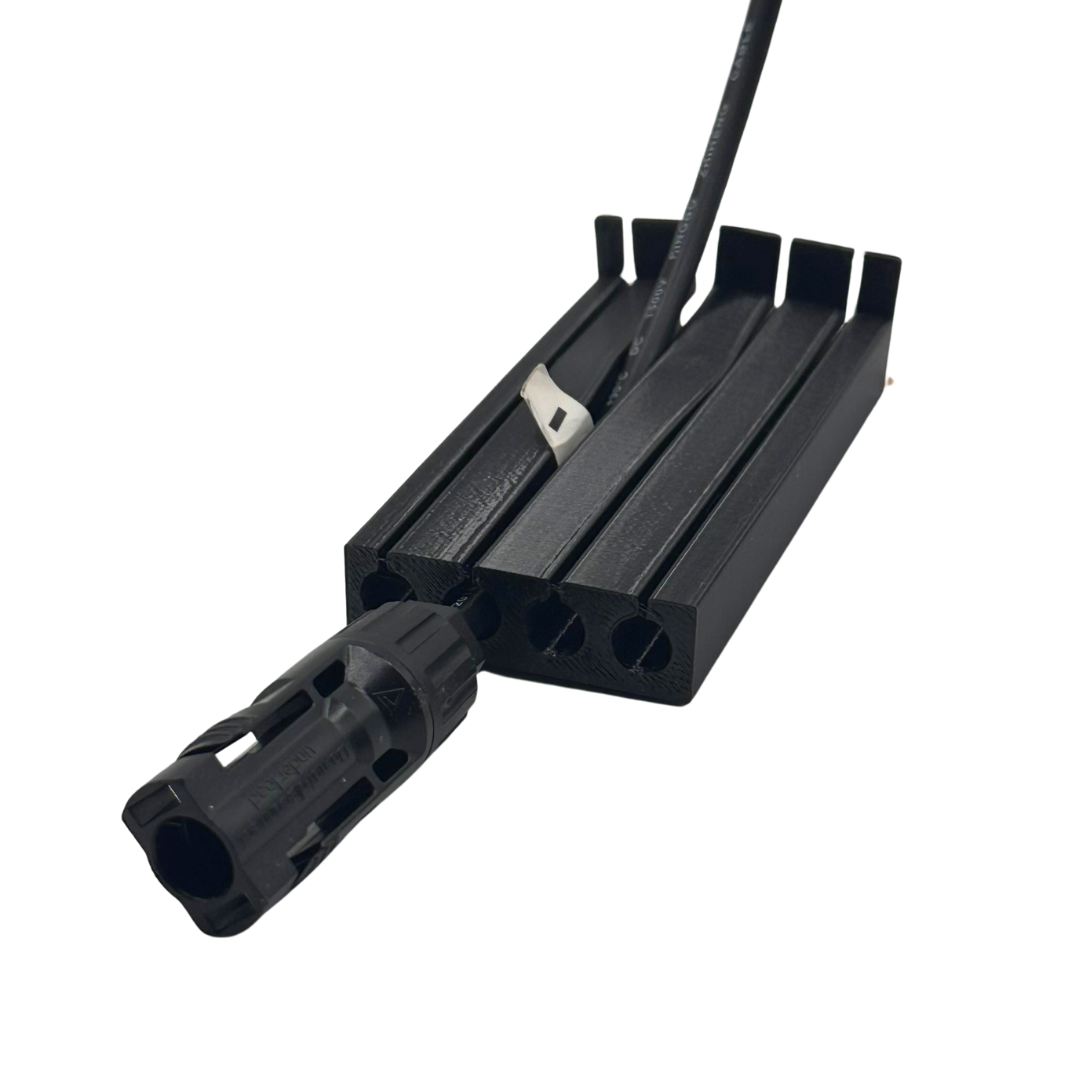
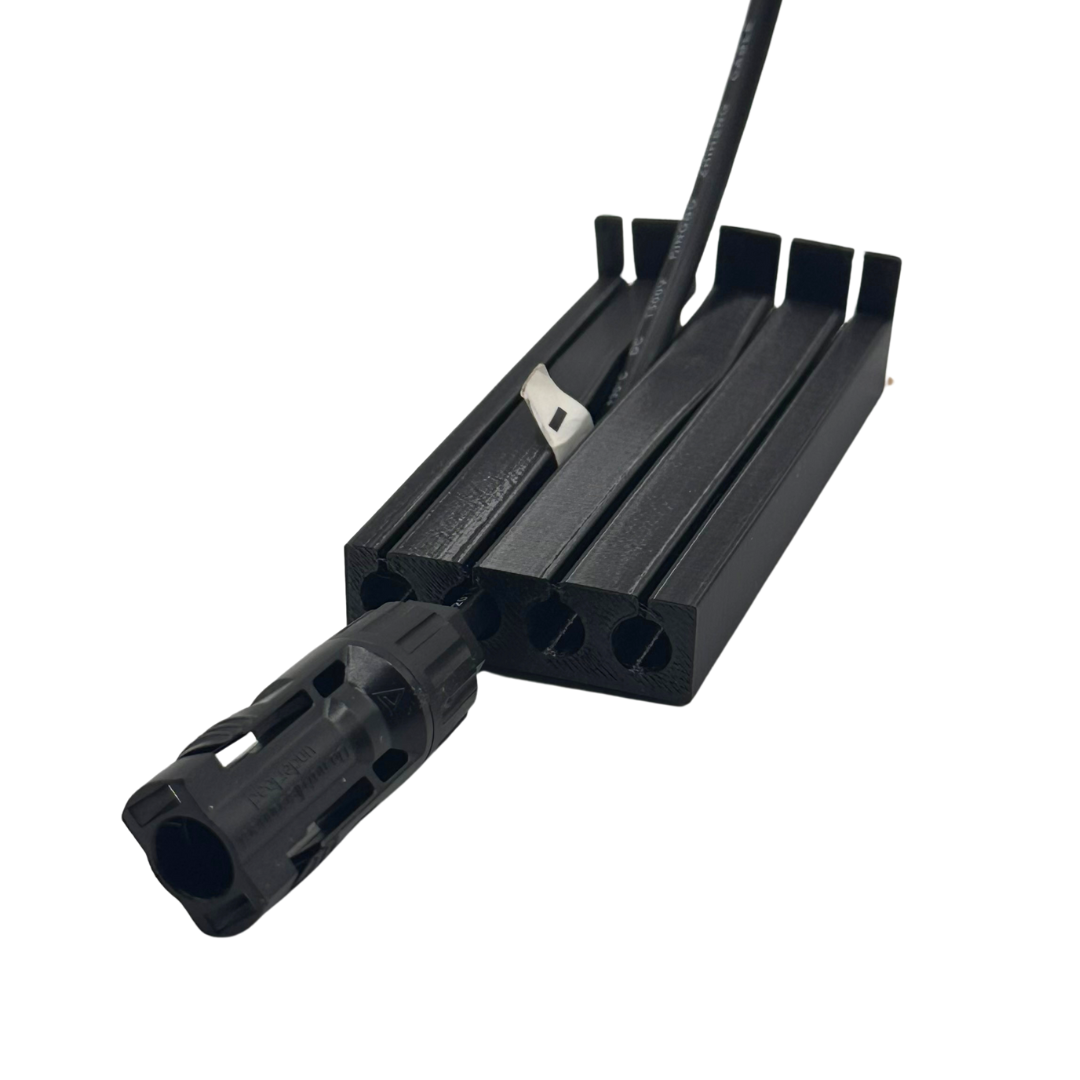
NEXCAPE Dachdurchführungen bestehen aus TPU (Thermoplastisches Polyurethan) und werden im 3D-Druckverfahren in Deutschland hergestellt. Das flexible Material passt sich verschiedenen Ziegelprofilen an und schmiegt sich auch an unebene Oberflächen dicht an. Die werkzeuglose Montage spart zusätzlich Zeit auf dem Dach.
Verfügbare Varianten
Je nach Stringplanung und Anlagenaufbau stehen verschiedene Varianten zur Verfügung:
- 2 PV / 2 PV+PE – für kleine Anlagen oder einzelne Strings
- 4 PV / 4 PV+PE – Standardlösung für die meisten Einfamilienhäuser
- 6 PV / 6 PV+PE – für größere Anlagen mit mehreren Strings
Alle Varianten sind in den Längen 105 mm, 125 mm und 150 mm erhältlich, um unterschiedliche Dachaufbauten abzudecken.
Praxistipp: Vor der Bestellung prüfen
Erfahrene Solarteure identifizieren das Ziegelprofil bereits bei der Vor-Ort-Besichtigung. Ein Foto des Ziegels genügt oft, um die passende Durchführungsgröße zu bestimmen. Bei Unsicherheiten hilft der direkte Kontakt zum Hersteller.
Flexible Dachdurchführungen für alle gängigen Ziegelprofile entdecken: zu den TPU-Dachdurchführungen für Solarkabel
Weiterführend: Welche Durchführung für welchen Ziegel? – Größen & Varianten im Überblick