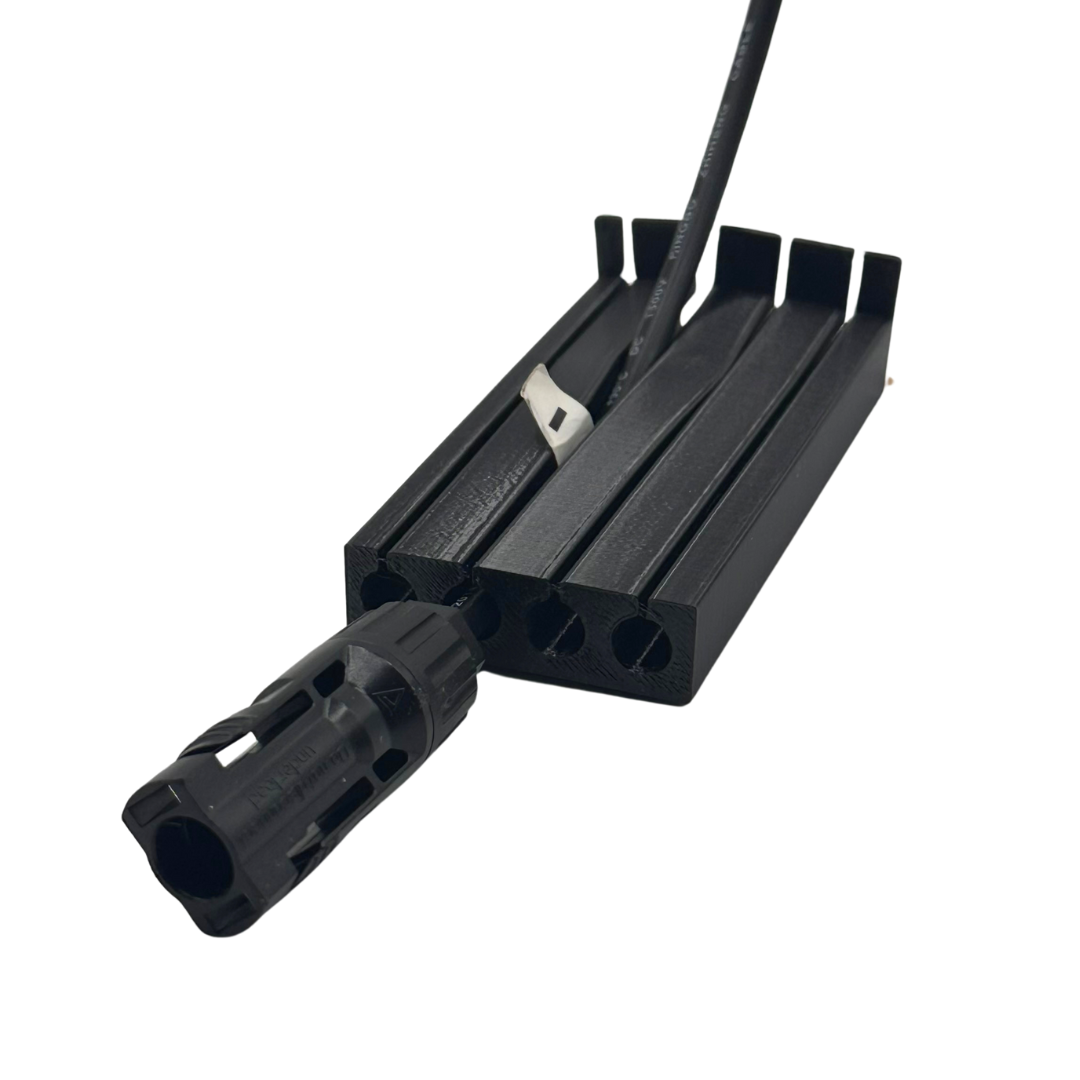
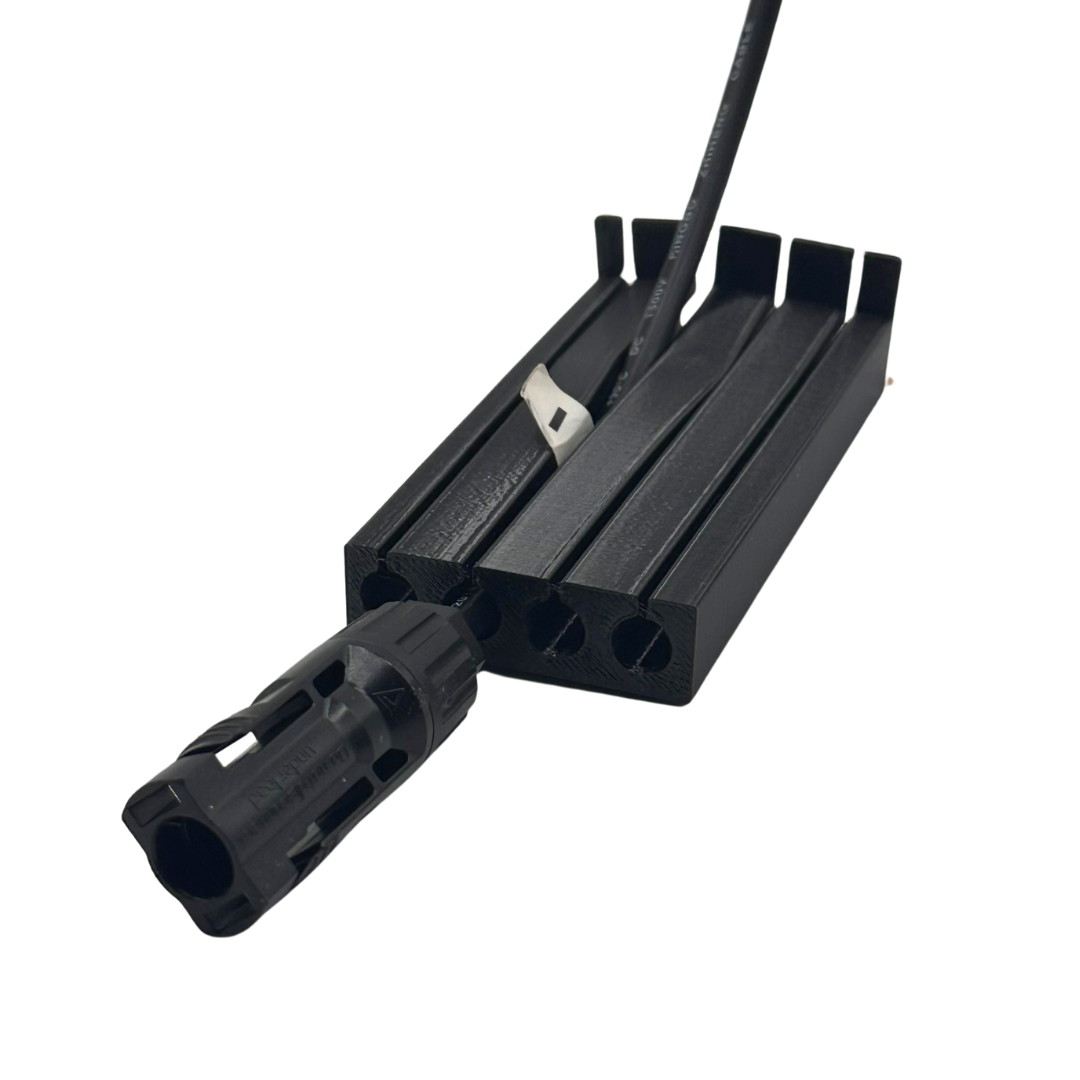
3D-Druck verändert die Solartechnik
Additive Fertigung – besser bekannt als 3D-Druck – hat längst den Sprung von der Prototypenentwicklung in die Serienproduktion geschafft. In der Photovoltaikbranche zeigt sich das besonders bei Zubehörteilen wie Dachdurchführungen. Was früher in starren Standardformen aus der Spritzgussmaschine kam, wird heute passgenau und flexibel gedruckt.
Grenzen herkömmlicher Fertigungsverfahren
Traditionelle Dachdurchführungen werden per Spritzguss aus Hartkunststoffen oder als Bleiformstücke gefertigt. Diese Verfahren haben Einschränkungen:
- Starre Formen passen nicht auf alle Ziegelprofile
- Werkzeugkosten machen kleine Varianten unwirtschaftlich
- Materialwahl ist durch das Verfahren eingeschränkt
- Anpassungen erfordern neue, teure Werkzeugformen
Vorteile des 3D-Drucks bei Dachdurchführungen
Materialfreiheit: TPU statt Kompromiss
Im 3D-Druck lässt sich TPU (Thermoplastisches Polyurethan) verarbeiten – ein Material, das im Spritzguss schwierig zu handhaben ist. TPU vereint Flexibilität, UV-Beständigkeit und mechanische Belastbarkeit in einem Werkstoff. Genau die Eigenschaften, die eine PV-Dachdurchführung braucht.
Variantenvielfalt ohne Mehrkosten
Ob 2, 4 oder 6 Kabeldurchführungen, mit oder ohne PE-Öffnung, in 105, 125 oder 150 mm Länge – im 3D-Druck sind Varianten keine Kostenfrage. Jede Variante wird aus derselben Druckanlage gefertigt, ohne teure Werkzeugwechsel.
Produktion in Deutschland
NEXCAPE fertigt alle Dachdurchführungen per 3D-Druck in Deutschland. Kurze Lieferwege, schnelle Reaktionsfähigkeit und die Sicherheit einer lokalen Produktion – Vorteile, die gerade im B2B-Geschäft zählen.
Schnelle Weiterentwicklung
Feedback aus der Praxis fließt direkt in die nächste Produktionscharge ein. Geometrieanpassungen, die beim Spritzguss Monate und tausende Euro kosten würden, sind im 3D-Druck innerhalb von Tagen umsetzbar.
Was Solarteure in der Praxis berichten
- Werkzeuglose Montage spart fünf bis zehn Minuten pro Durchführung
- MC4-Stecker müssen nicht ausgebaut werden – weniger Fehlerquellen
- Das flexible TPU passt auf verschiedene Ziegelprofile ohne Nacharbeit
- Keine zusätzliche Abdichtung mit Silikon oder Butylband nötig bei korrekter Montage
Zukunft der Fertigung in der Solarbranche
Der 3D-Druck ist kein Nischenthema mehr. Er ermöglicht bessere Produkte aus optimalen Materialien, ohne die Einschränkungen traditioneller Verfahren. Für Solarteure bedeutet das: schnellere Montage, weniger Reklamationen und ein professionelleres Ergebnis auf dem Dach.
3D-gedruckte TPU-Dachdurchführungen ab 20 Stück mit Mengenrabatt: PV-Dachdurchführungen ansehen