PV-Kabel am Ziegeldach: Worauf es an der Durchführung wirklich ankommt
An der Stelle, an der das Solarkabel vom Dach ins Hausinnere geführt wird, entstehen die meisten späteren Reklamationen. Entscheidend sind zwei Dinge – und es lohnt sich, sie sauber zu trennen.
1. Die Dichtigkeit kommt aus der Eindeckung – nicht aus einem Bauteil
Ein Ziegeldach ist ein konstruktiv hinterlüftetes, überlappendes System. Die Regensicherheit entsteht durch die fachgerechte Eindeckung und – wo nötig – das Unterdach. Wer eine einzelne Durchdringung mit Silikon „dicht kleben" will, erzeugt langfristig eher Probleme. Die Kabelführung wird sauber in die Ziegelebene integriert, nicht abgedichtet.
2. Das eigentliche Risiko fürs Kabel: Abrieb an der Ziegelkante
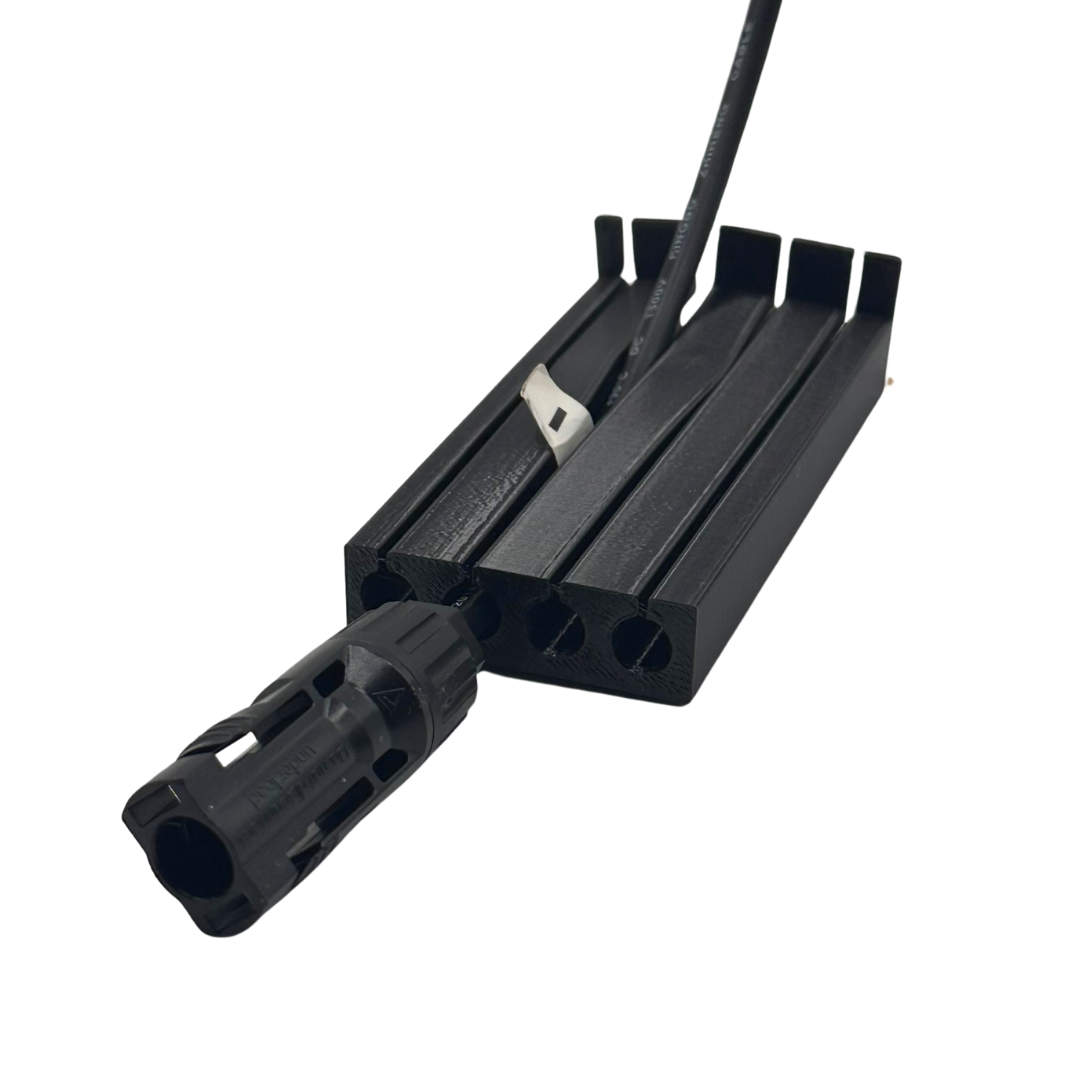
Liegt das Solarkabel ungeschützt auf der scharfen Ziegelkante, scheuert die Isolierung über die Jahre durch – Aderbruch, Kurzschluss- und Brandgefahr, am Ende eine teure Reklamation. Genau hier setzt die Dachdurchführung von Dachdurchführung24 an: Sie wird in den Ziegel eingelegt und schützt das Kabel dauerhaft vor genau diesem Abrieb. Ein reiner, mechanischer Abriebschutz aus UV-beständigem TPU, Made in Germany.
Dos für Solarteure
- Kabel über die seitlichen Schlitze einlegen – vormontierte Stecker bleiben dran.
- Ziegel an der Auflagekante leicht ausschleifen, Durchführung einhängen, Ziegel zurücklegen.
- Größe nach Ziegeltyp und Kabelquerschnitt wählen (105/125/150 mm; 2-/4-fach, mit/ohne Erdung).
- Regensicherheit über die Eindeckung/das Unterdach sicherstellen.
Don'ts
- Kabel nicht ungeschützt über die Ziegelkante führen (Abriebgefahr).
- Die Durchführung nicht als „Dichtung" missverstehen – sie ist Abriebschutz, kein Dichtelement.
- MC4-Stecker nicht unnötig demontieren.
Mengenkonditionen für Fachbetriebe und kostenloses Muster: PV-Dachdurchführungen im Shop.