Strings, Kabel, Durchführungen: Wie hängt das zusammen?
Die Stringplanung ist das Fundament jeder PV-Anlage. Sie bestimmt, wie die Module verschaltet werden, wie viele Kabel über das Dach laufen und wie viele davon durchs Dach ins Gebäude geführt werden müssen. Für die Auswahl der richtigen Dachdurchführung ist die Kabelanzahl der entscheidende Faktor.
Grundlagen der Stringplanung
Ein String besteht aus mehreren in Reihe geschalteten PV-Modulen. Jeder String hat zwei Anschlusskabel: ein Pluskabel und ein Minuskabel. Diese beiden Kabel müssen vom Dach zum Wechselrichter geführt werden.
- 1 String = 2 PV-Kabel (Plus + Minus)
- 2 Strings = 4 PV-Kabel
- 3 Strings = 6 PV-Kabel
Zusätzlich wird in vielen Fällen ein Erdungskabel (PE) vom Montagegestell ins Gebäude geführt.
Praxisbeispiele
Kleines Einfamilienhaus (5-8 kWp)
Typisch: 1 String mit 12-16 Modulen. Benötigt werden 2 PV-Kabel plus optional ein PE-Kabel. Passende Durchführung: 2 PV oder 2 PV+PE.
Mittleres Einfamilienhaus (8-12 kWp)
Üblich: 2 Strings. Das ergibt 4 PV-Kabel plus optional PE. Passende Durchführung: 4 PV oder 4 PV+PE.
Großes Wohnhaus oder Gewerbe (12-20 kWp)
Häufig: 3 Strings mit 6 PV-Kabeln plus PE. Passende Durchführung: 6 PV oder 6 PV+PE.
Eine Durchführung oder mehrere?
Grundsätzlich gilt: Weniger Durchführungen bedeuten weniger potenzielle Undichtigkeiten am Dach. Eine einzelne Durchführung mit ausreichend Kabeldurchlässen ist daher einer Lösung mit mehreren kleinen Durchführungen vorzuziehen.
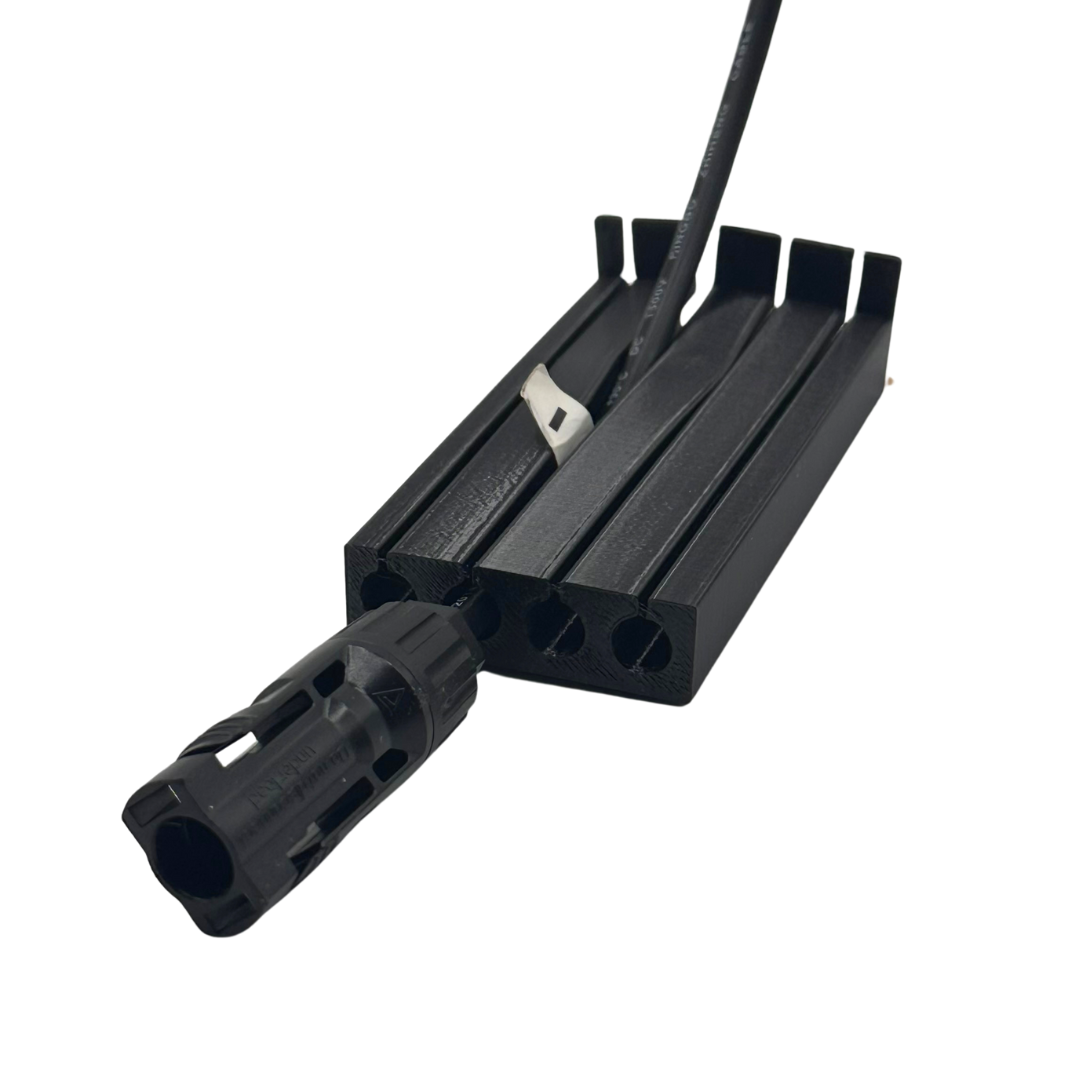
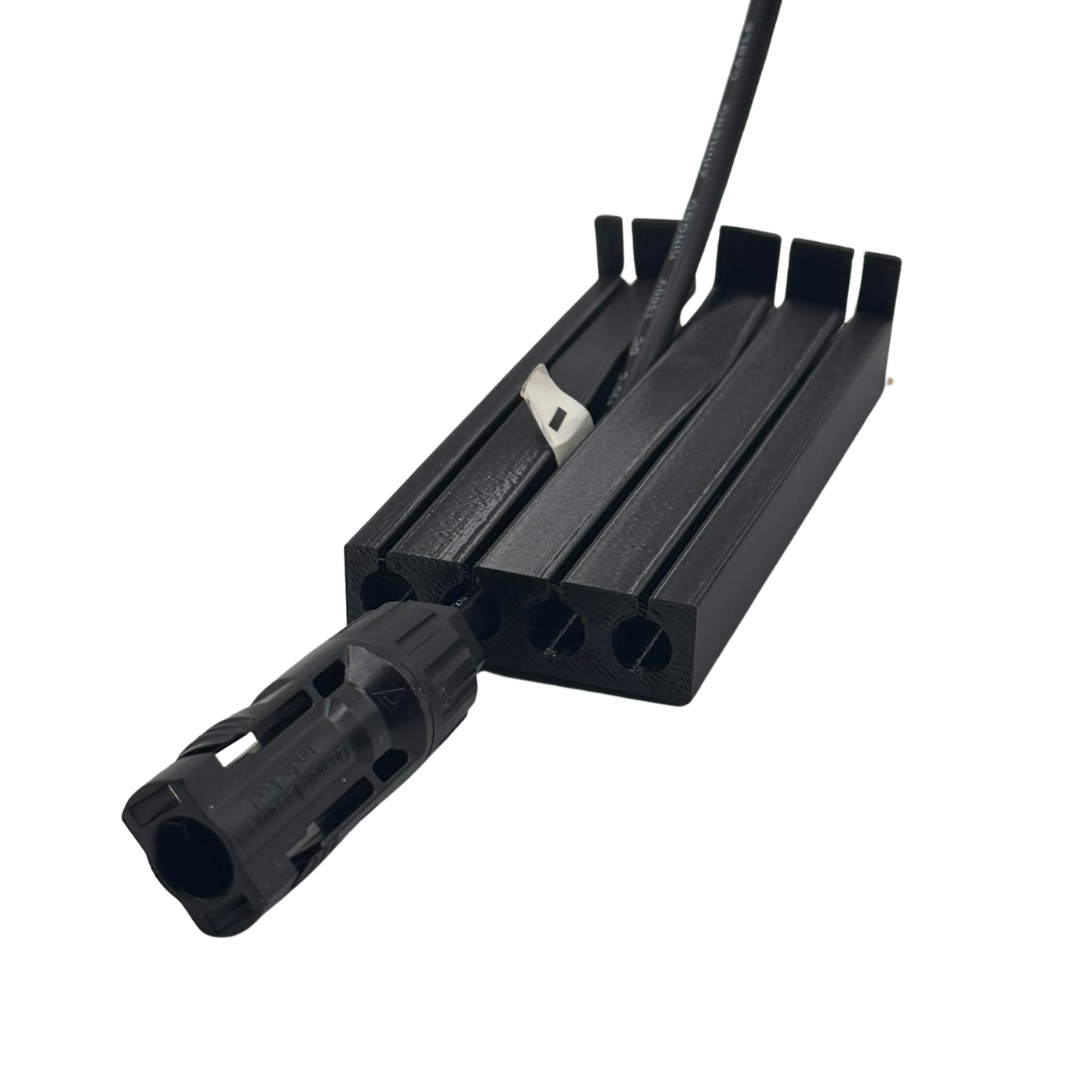
NEXCAPE bietet genau deshalb Varianten mit bis zu 6 PV-Durchführungen plus PE in einem Bauteil. So werden auch größere Anlagen mit nur einer Dachdurchführung realisiert.
Durchführungslänge nicht vergessen
Neben der Kabelanzahl spielt die Länge eine Rolle. Sie muss den Abstand zwischen Ziegeloberfläche und Dachinnenseite überbrücken. NEXCAPE Durchführungen gibt es in 105 mm, 125 mm und 150 mm – passend für die gängigsten Dachaufbauten in Deutschland.
Fazit: Erst planen, dann bestellen
Die Stringplanung bestimmt die Durchführung – nicht umgekehrt. Solarteure sollten die Kabelanzahl frühzeitig festlegen und die Durchführung entsprechend auswählen. Alle NEXCAPE Durchführungen aus UV-beständigem TPU werden im 3D-Druck in Deutschland gefertigt und ermöglichen werkzeuglose Montage ohne MC4-Ausbau.
Die passende Durchführung für jede Stringplanung finden: zu den TPU-Dachdurchführungen für Solarkabel
Weiterführend: Passende Variante nach Stranganzahl wählen (2 PV / 4 PV, ± Erdung)