The PV high season is just around the corner. Experience shows that between March and June, electrical companies in Germany record the most installation orders — and 2026 will be no different. On the contrary: The solar mandate in several federal states, rising energy prices, and the ongoing balcony power plant boom are ensuring full order books.
However, if you only react when orders start coming in, you lose valuable time. In this article, we show you how to best prepare your business for the coming months — from material planning to efficient installation on the roof.
Why 2026 will be a particularly strong PV season
Three factors are driving demand this year:
Solar mandate for roof renovations: North Rhine-Westphalia introduced the solar mandate for roof renovations on January 1, 2026. Baden-Württemberg and Lower Saxony have had similar regulations since 2023 and 2025, respectively. For electrical companies in these federal states, this means: Every major roof renovation potentially becomes a PV order.
Balcony power plant demand continues to grow: Simplified registration and increasing module outputs make balcony power plants more attractive than ever for homeowners. Many customers want professional installation — especially when cables need to be routed through the roof.
Existing systems need maintenance: With over 4.8 million existing PV systems in Germany, the maintenance market is also growing. Provisional cable entries from the early days often show signs of abrasion after five or more years and need to be modernized.
Material planning: Order now instead of waiting later
Experienced installers know the problem: In the middle of the high season, certain components are suddenly only available with long delivery times. The solution is proactive material planning.
Calculate quantity: Consider how many PV systems you will realistically install between April and June. Per system, depending on the system size and cable routing, you will need between 2 and 8 cable entries. For 20 planned installations, 100 or more entries quickly accumulate.
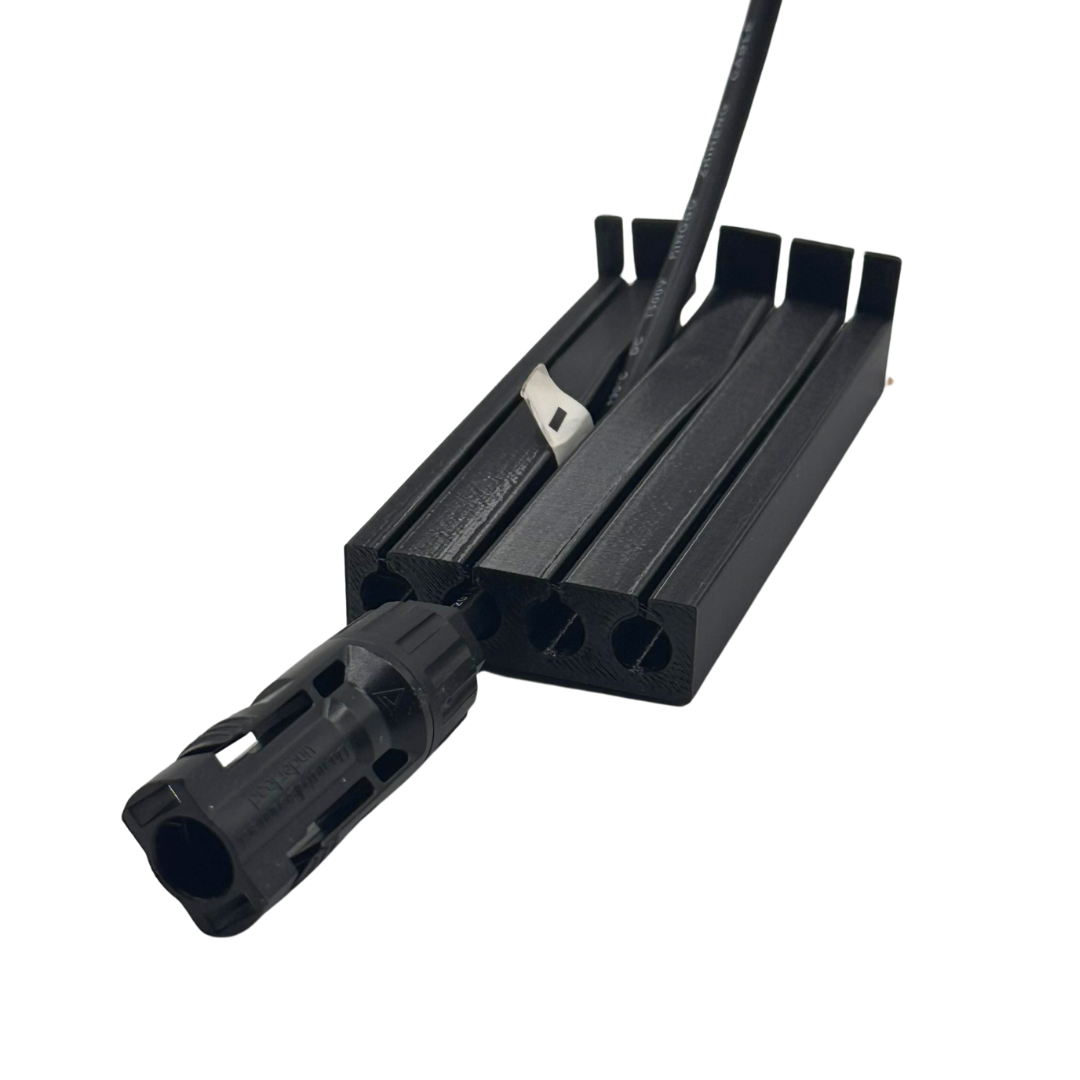
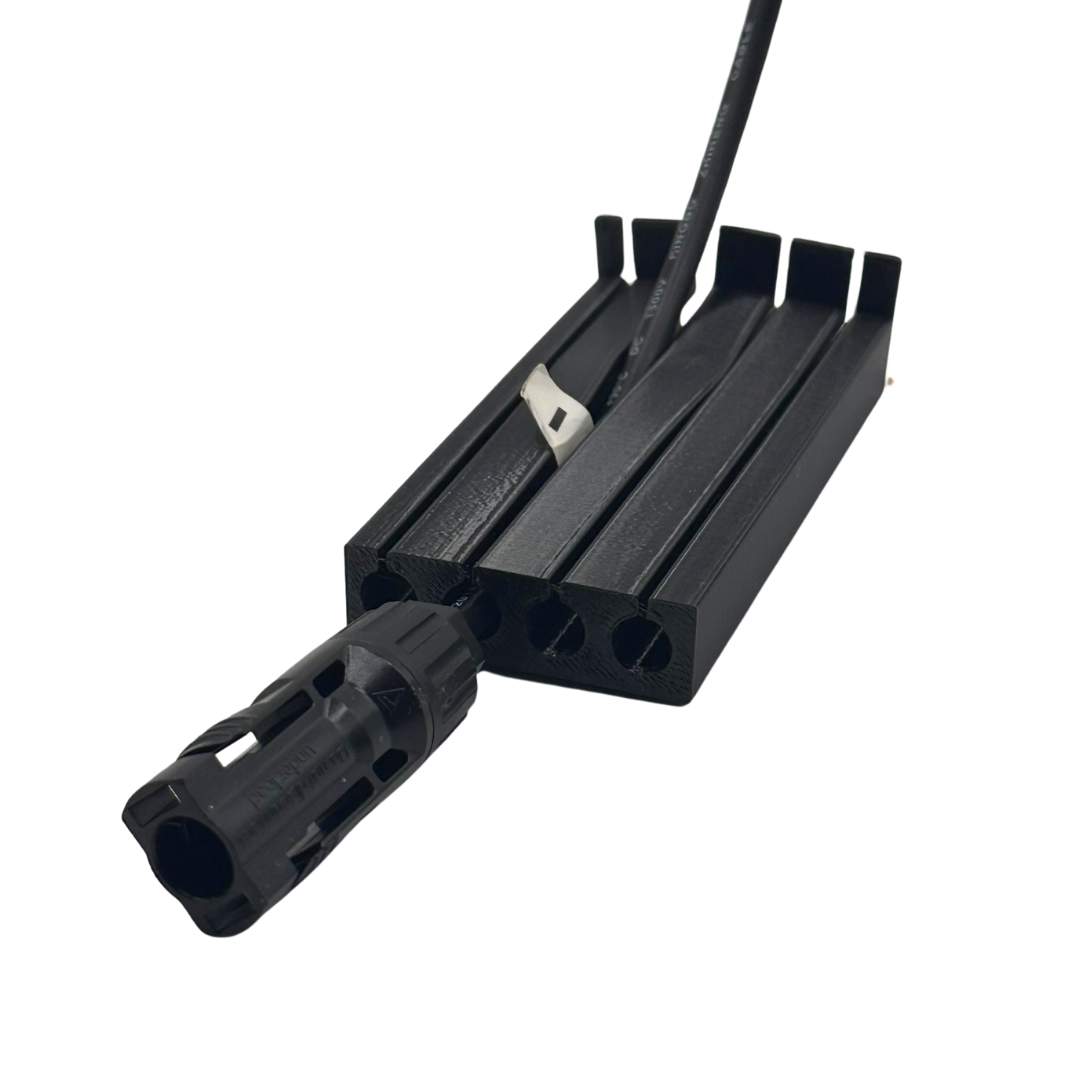
Utilize bulk packages: The NEXCAPE® PV cable roof lead-through is available in packages of 20, 50, 100, 500, and 1,000 pieces. Larger packages offer better unit prices and ensure that you are supplied throughout the season — without reorders and additional shipping costs. We deliver free of charge within Germany for orders over 150 €.
Keep all three lengths in stock: The roof lead-throughs are available in lengths of 105 mm, 125 mm, and 150 mm. Which one you need depends on the tile thickness. Having all three variants in stock saves waiting time on the construction site.
Reduce installation time: Practical tips for the season
Every minute on the roof counts — especially when order books are full. Here are three practical tips to increase your installation efficiency:
Do not disassemble MC4 connectors: A common time-waster with conventional lead-throughs is the disconnection and reconnection of MC4 connectors. The NEXCAPE® roof lead-through is designed so that PV cables with assembled MC4 connectors can be passed through. This saves 10 to 15 minutes per cable strand — for a complete system, this quickly adds up to over an hour.
Installation in three steps: The installation is intentionally kept simple: grind out roof tiles if necessary, route PV and grounding cables, hang the roof lead-through into the tile. No special tools are required. This allows even installers without special training to install the lead-through correctly.
Prepare cable management: Plan the cable routes on the roof in advance. Clean cable routing with suitable cable clamps not only reduces installation time but also protects the cables from abrasion and weather influences in the long term.
Example calculation: Time savings per season
Assume your company installs 30 PV systems between April and June, with an average of 4 cable lead-throughs per system. This results in 120 lead-throughs in three months.
If you save 15 minutes per lead-through because the MC4 connectors do not have to be disassembled, this results in 30 hours of saved working time in one season. At an hourly rate of 65 €, this corresponds to a value of almost 2,000 € — working time that you can use for additional orders.
Checklist: Season preparation for electrical companies
Use the remaining weeks before the start of the season to check off the following points: Check material stock and reorder cable lead-throughs in all three lengths. Train installation teams on lead-through assembly — installation is intuitive, but a brief introduction ensures consistent quality. Keep cable clamps and fastening material ready for clean cable management. Optimize vehicle loading so that all necessary components are at hand. Prepare maintenance offers for existing customers — the retrofit market will continue to grow in 2026.
Conclusion: Prepare now, benefit in the season
The 2026 PV season offers enormous opportunities for electrical companies and installers. Those who invest in preparation now — ordering materials, optimizing processes, and training the team — will not only cope with the wave of orders but will also benefit from it.
Would you like to stock up for the season? Discover our bulk packages of the NEXCAPE® PV cable roof lead-through — available in 105 mm, 125 mm, and 150 mm, from 20 pieces to a 1,000-piece package. Free shipping for orders over 150 €.
For questions, please contact us at support@nexcape.de or by phone at 07054 927999.
This article is aimed at electrical companies and installers in the B2B sector. All product information is based on the official NEXCAPE® data sheet (Batch 12/2025).