Bestandsdach und PV-Nachrüstung: Die Ausgangslage
Immer mehr Hausbesitzer und Unternehmen rüsten bestehende Gebäude mit PV-Anlagen nach. Das Dach war nicht auf PV-Kabel ausgelegt — es gibt keine vorbereiteten Durchführungen, die Ziegel können alt und brüchig sein. Dieser Artikel richtet sich an Elektrobetriebe und Solarteure, die regelmäßig Nachrüstprojekte übernehmen.
Schritt 1: Bestandsaufnahme und Kabelrouting
Bevor ein Ziegel gelüftet wird, sollte das Kabelrouting feststehen:
- Wo sitzt der Wechselrichter? (Keller, Dachboden, Außenwand)
- Wie viele Kabel müssen durchgeführt werden?
- Gibt es vorhandene Öffnungen, die genutzt werden können?
- In welchem Zustand sind die Ziegel?
Schritt 2: Den richtigen Durchführungspunkt wählen
Bei Nachrüstungen den Punkt idealerweise wählen:
- Möglichst nah am Wechselrichterstandort (kurze Kabelwege)
- Unter einem Firstziegel oder an einer Stelle mit robustem Unterdach
- Nicht im Bereich von Kehlen oder anderen Wassereintragsbereichen
- Zugänglich für spätere Wartung
Schritt 3: Ziegel entfernen und Durchführung einbauen
- Ziegel an der geplanten Stelle vorsichtig abheben — bei alten Dächern mit Vorsicht
- Unterspannbahn prüfen: Risse oder Fehlstellen vorher abdichten
- Kabelführung durch die Unterspannbahn: Schlitz schneiden, Kabel einführen, mit Bitumenklebeband abdichten
- Dachdurchführung über das Kabel stülpen und befestigen
- Ziegel wieder auflegen
Typische Fehler bei Nachrüstungen
Fehler 1 – Mehrere Kabel in einer Öffnung: Führt zu Kabelquetschung und macht eine ordentliche Abdichtung unmöglich.
Fehler 2 – Unterspannbahn nicht abgedichtet: Feuchtigkeit im Dachstuhl wird erst nach Jahren sichtbar — dann aber teuer.
Fehler 3 – Kein mechanischer Kabelschutz: Kabel direkt auf dem Ziegel werden durch Wärmedehnung und Reibung geschädigt.
Fazit
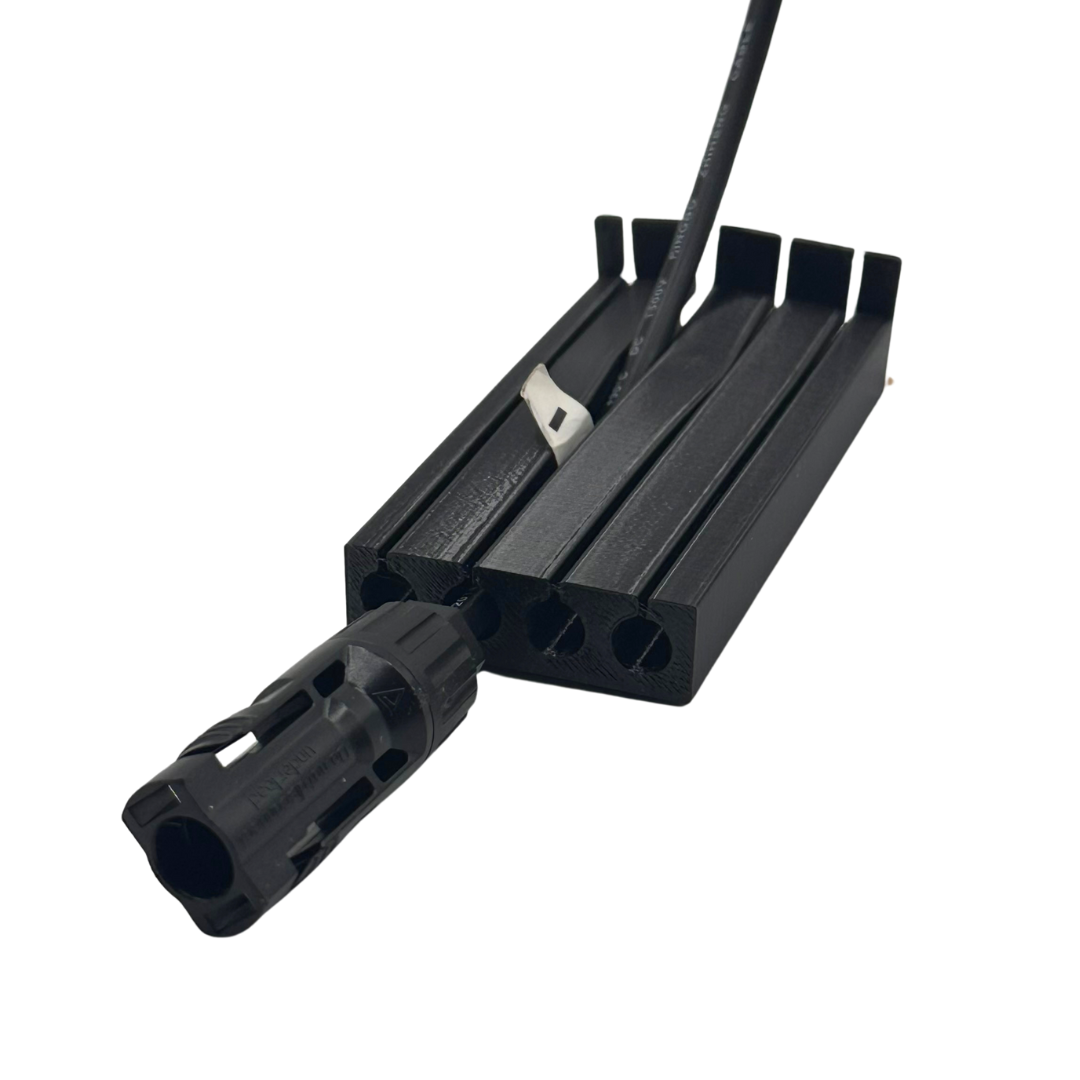
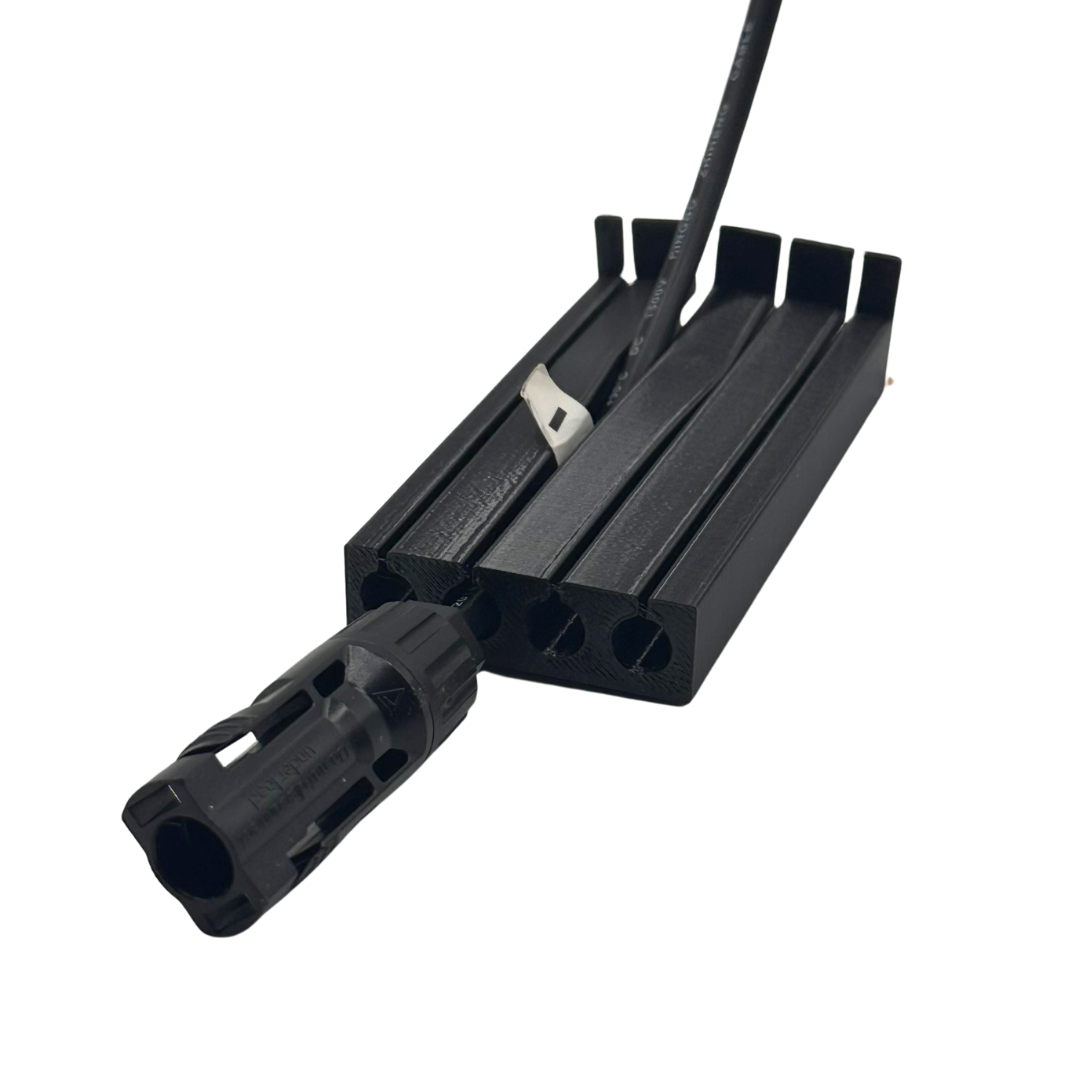
Nachrüstungen gelingen mit sorgfältiger Planung und je einem Kabelschutz pro Durchgang. Unsere PV-Kabel-Dachdurchführungen in 105 mm, 125 mm und 150 mm sind abriebfest, UV-beständig und Made in Germany. B2B-Staffelpreise ab 20 Stück.
Die passenden PV-Kabel-Dachdurchführungen als mechanischen Abriebschutz finden Sie im D24-B2B-Shop (Mengenstaffel ab 20 Stück) – UV-beständiges TPU, Made in Germany.