Warum der Kabelquerschnitt bei der Dachdurchführung entscheidend ist
Bei der Planung einer Photovoltaikanlage spielt der Kabelquerschnitt eine zentrale Rolle – nicht nur für die elektrische Sicherheit, sondern auch für die Wahl der passenden Dachdurchführung. Wer hier falsch plant, riskiert entweder eine zu enge Durchführung oder unnötig große Öffnungen im Dach.
Gängige Kabelquerschnitte in PV-Anlagen
Die meisten Solarmodule werden mit vorkonfektionierten Kabeln ausgeliefert. Die gängigsten Querschnitte im Überblick:
| Querschnitt | Außendurchmesser (ca.) | Typischer Einsatz |
| 4 mm² | 5,5–6,5 mm | Modulkabel, Stringverkabelung bis 30 m |
| 6 mm² | 6,5–7,5 mm | Längere Strings, DC-Hauptleitung |
| 10 mm² | 8,0–9,5 mm | Große Anlagen, lange DC-Leitungen |
| 16 mm² | 10,0–11,5 mm | Erdungskabel, Potentialausgleich |
Der Außendurchmesser variiert je nach Hersteller und Isolierungsdicke. Vor der Bestellung einer Dachdurchführung sollte der tatsächliche Durchmesser gemessen werden.
Wie viele Kabel müssen durch das Dach?
Die Anzahl der Kabel hängt von der Anlagenkonfiguration ab. Typische Szenarien:
- Kleines Einfamilienhaus (5–10 kWp): 1 String mit 2 DC-Kabeln (Plus und Minus)
- Mittleres Einfamilienhaus (10–15 kWp): 2 Strings mit 4 DC-Kabeln
- Größere Anlage (15+ kWp): 3 Strings mit 6 DC-Kabeln
Zusätzlich kann ein Erdungskabel (PE) für den Potentialausgleich erforderlich sein.
Die passende NEXCAPE Dachdurchführung wählen
NEXCAPE bietet Dachdurchführungen aus TPU (Thermoplastisches Polyurethan) in sechs Varianten:
- 2 PV und 2 PV+PE – für Einzelstring-Anlagen
- 4 PV und 4 PV+PE – für Zwei-String-Anlagen
- 6 PV und 6 PV+PE – für Drei-String-Anlagen
Die PE-Varianten enthalten einen zusätzlichen Durchlass für das Erdungskabel. Jede Variante ist in den Längen 105 mm, 125 mm und 150 mm erhältlich, um verschiedene Ziegelgrößen abzudecken.
Kabel ohne MC4-Ausbau durchführen
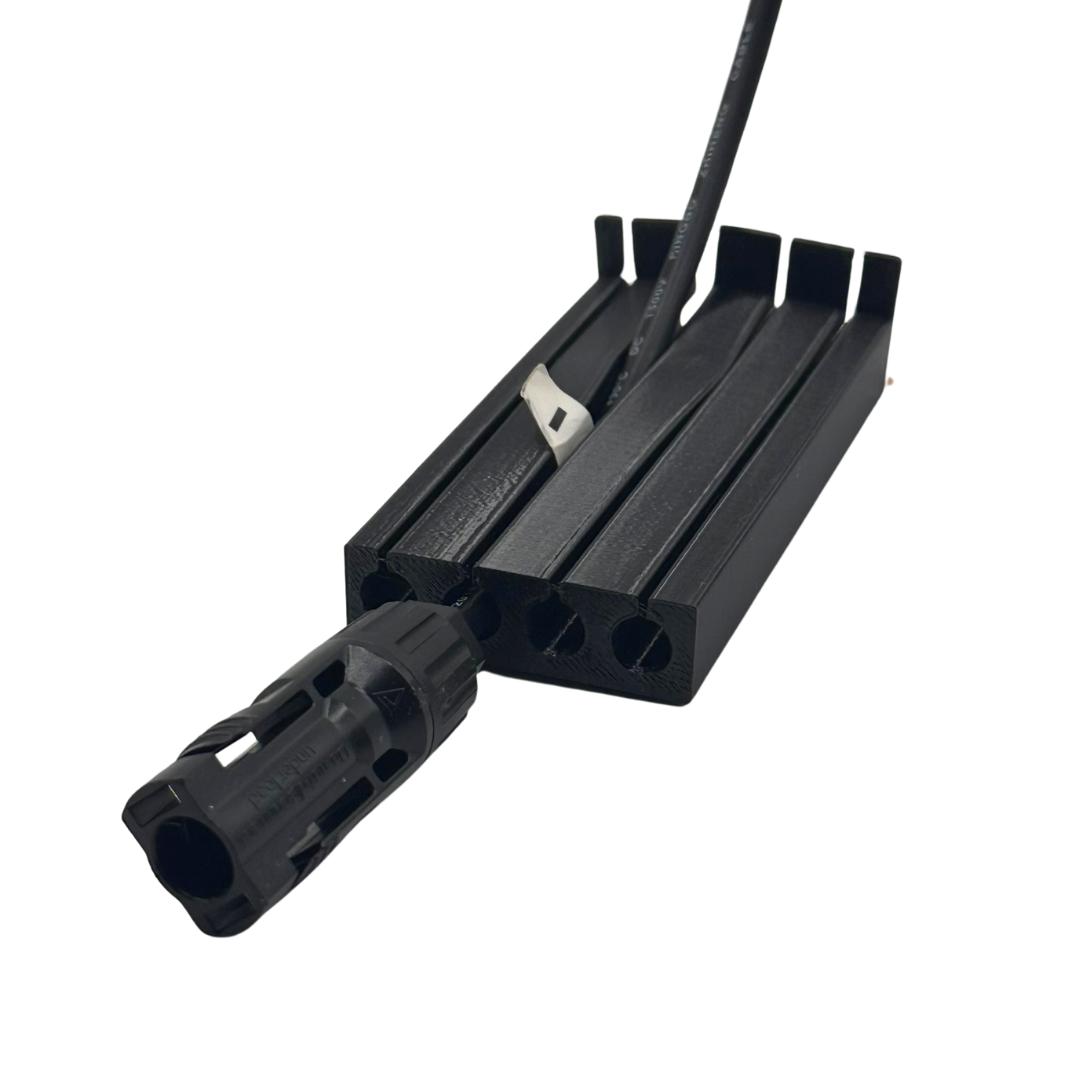
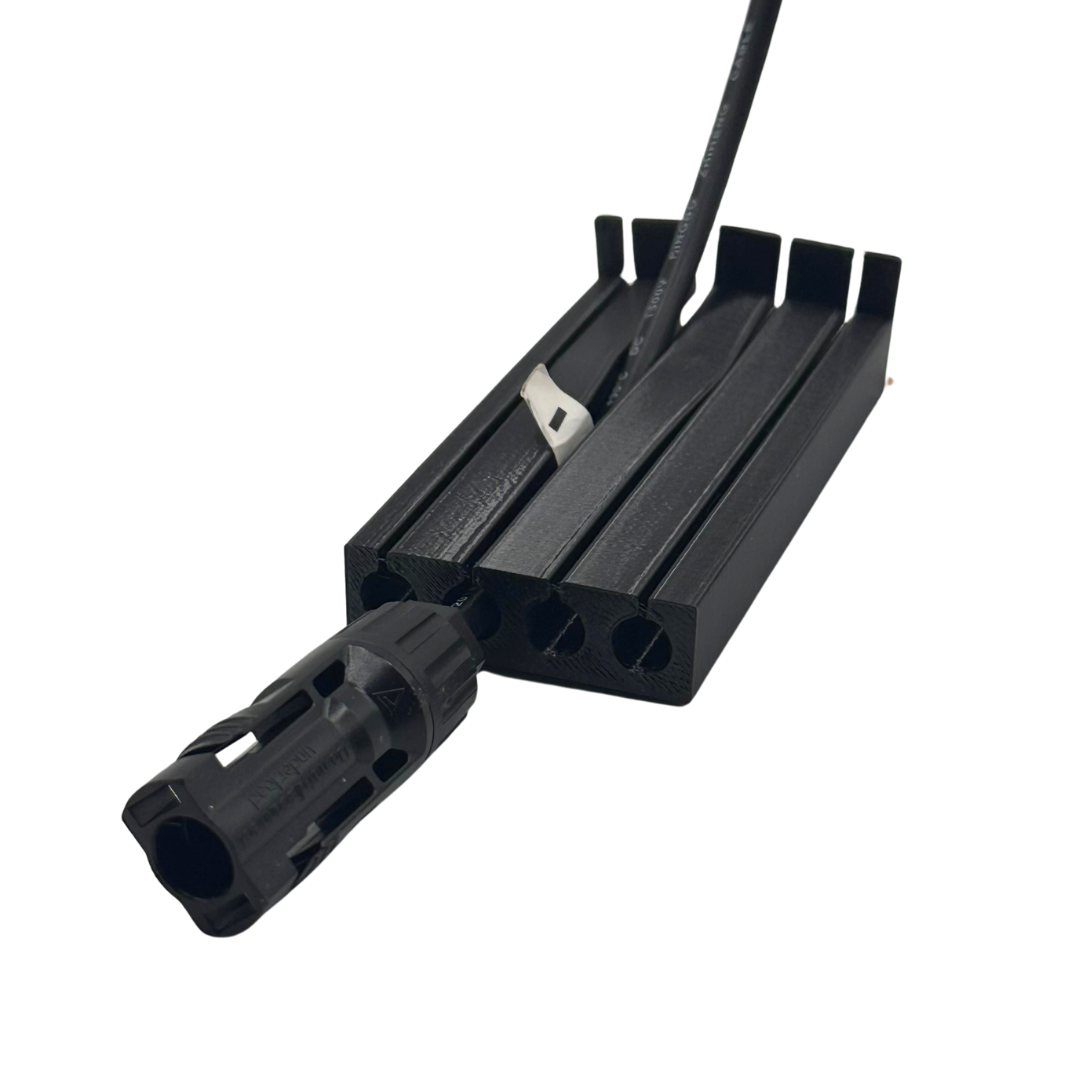
Ein wesentlicher Vorteil der NEXCAPE Durchführungen: Die MC4-Stecker müssen nicht demontiert werden. Die Kabel werden mitsamt Stecker durch die flexible TPU-Durchführung geführt. Das spart Zeit und eliminiert eine häufige Fehlerquelle bei der Installation.
Praxistipp: Immer etwas Reserve einplanen
Erfahrene Solarteure empfehlen, bei der Dimensionierung lieber eine Nummer größer zu wählen. Wenn Kabel eng anliegen, kann das bei Temperaturschwankungen zu Spannungen führen. Die flexible TPU-Konstruktion der NEXCAPE Durchführungen gleicht kleine Toleranzen aus, dennoch sollte der Durchmesser stimmen.
Finden Sie die passende Dachdurchführung für Ihre Kabelquerschnitte: PV-Dachdurchführungen ansehen