Häufige Fehler bei der Solarkabel-Verlegung auf dem Dach
Die Verlegung von Solarkabeln auf dem Dach gehört zu den Arbeitsschritten, die über die Langlebigkeit einer PV-Anlage entscheiden. Fehler bei der Kabelführung führen zu Ertragsverlusten, Sicherheitsrisiken und teuren Nachbesserungen. Hier sind die häufigsten Fehler — und wie Sie sie vermeiden.
Fehler 1: Kabel frei auf dem Dach verlegen
Freiliegende Kabel sind UV-Strahlung, Witterung und Marderbiss ausgesetzt. Auch wenn die Kabelisolierung für den Außenbereich geeignet ist, verkürzt die permanente Exposition die Lebensdauer. Führen Sie Kabel möglichst schnell durch das Dach in den geschützten Dachraum.
Fehler 2: Zu enge Biegeradien
Solarkabel haben einen vorgeschriebenen Mindestbiegeradius. Wird dieser unterschritten, kann die Isolierung beschädigt werden — ein schleichender Defekt, der erst Jahre später zum Problem wird. Achten Sie besonders an der Durchführungsstelle auf ausreichend Platz für den Kabelbogen.
Fehler 3: MC4-Stecker unter Zug setzen
Wenn Kabel zu straff verlegt werden, stehen die MC4-Steckverbindungen unter mechanischer Belastung. Das kann zu Kontaktproblemen und erhöhtem Übergangswiderstand führen. Lassen Sie immer eine Kabelschlaufe als Zugentlastung.
Fehler 4: Ungeeignete Durchführung verwenden
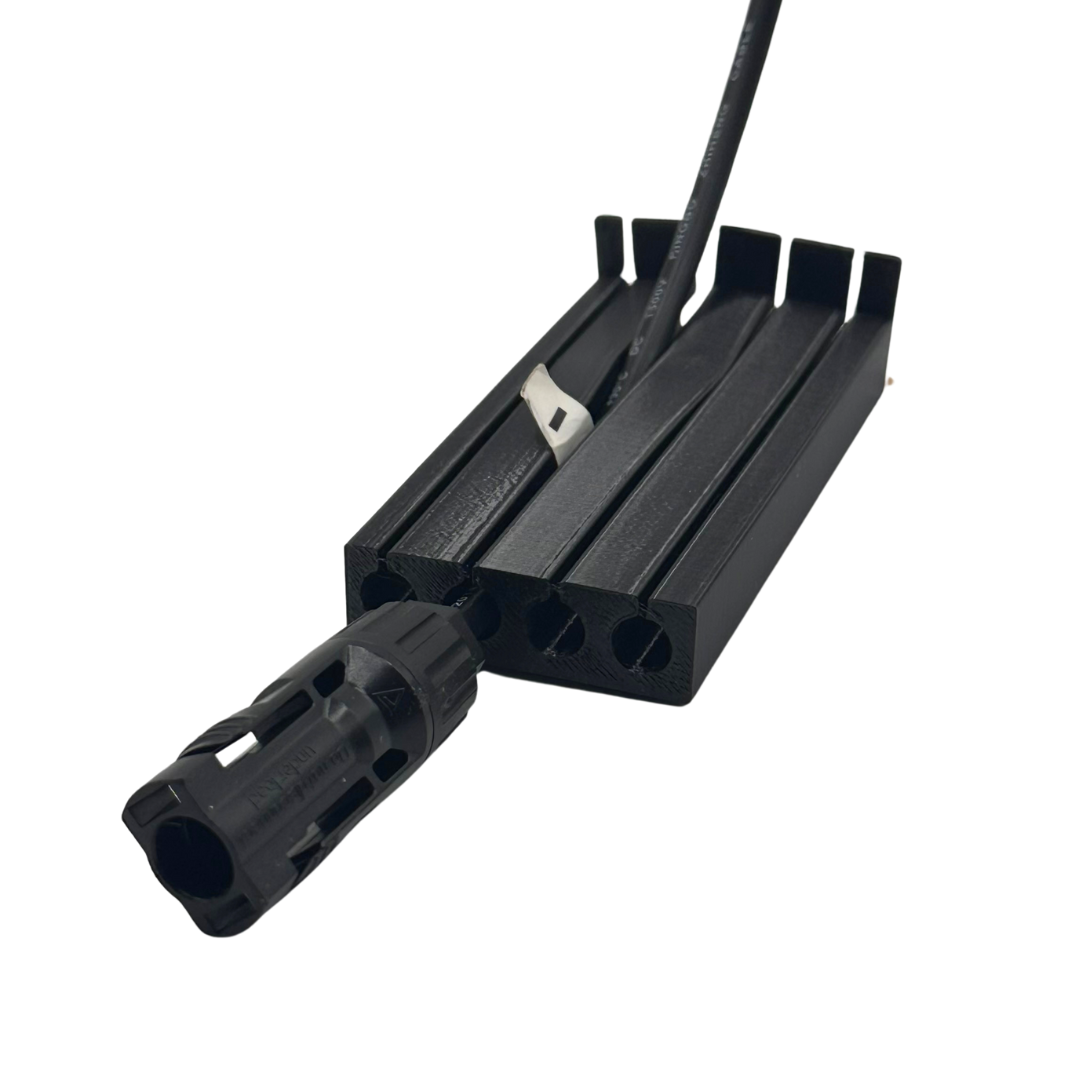
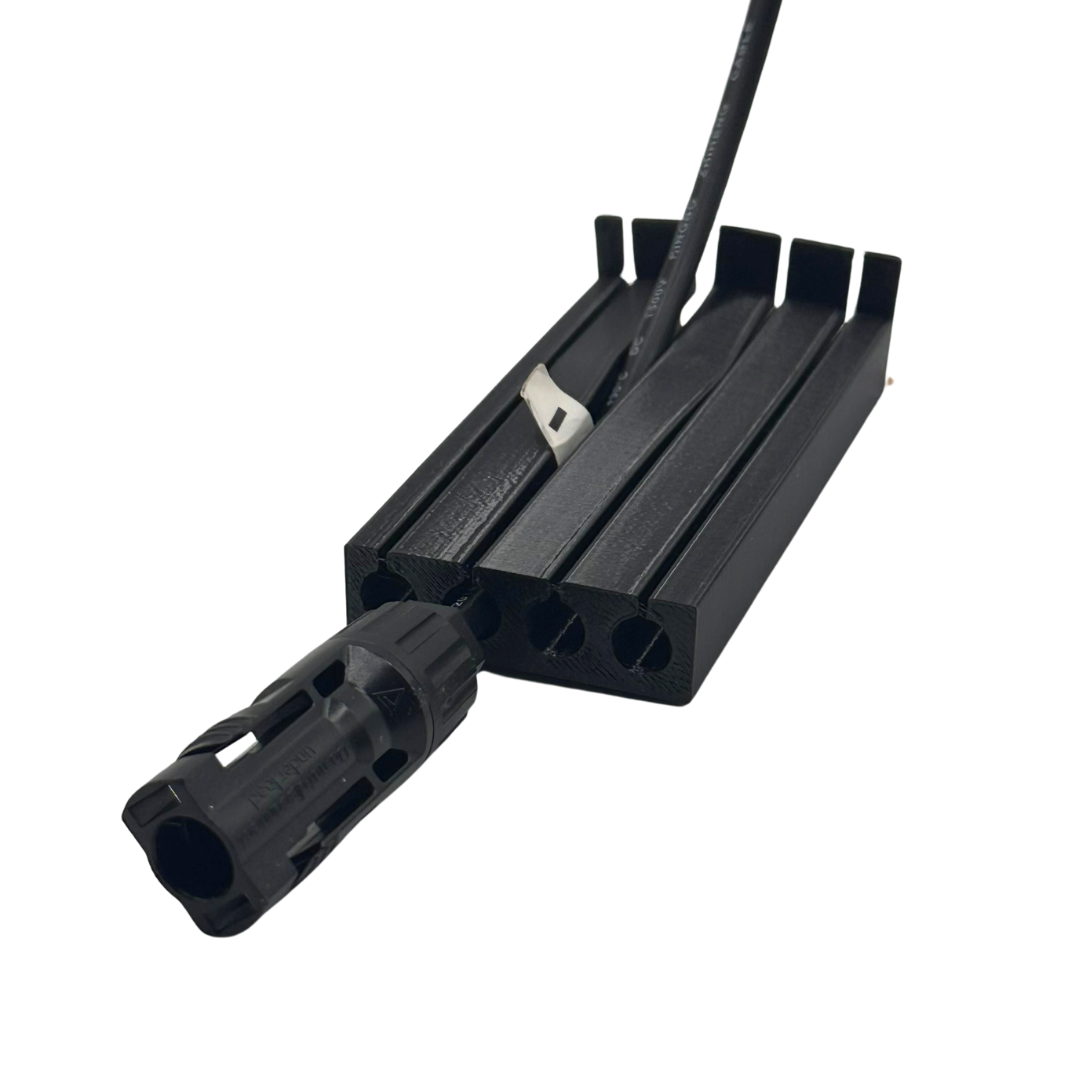
Lüftungsziegel, provisorische Bohrlöcher oder Silikonabdichtungen sind keine professionellen Lösungen für die Kabelführung. Sie altern schnell, werden undicht und sehen unprofessionell aus. Setzen Sie auf zweckbestimmte Dachdurchführungen wie die NEXCAPE TPU-Durchführungen — werkzeuglos montiert, dicht und langlebig.
Fehler 5: MC4-Stecker unnötig trennen
Das Trennen und Wiederverbinden von MC4-Steckern erhöht das Risiko von Kontaktproblemen und Lichtbogenbildung. NEXCAPE Durchführungen sind so dimensioniert, dass MC4-Stecker komplett montiert durchgeführt werden können — ohne Trennung.
Fehler 6: Erdungskabel vergessen oder unsauber führen
Der Potenzialausgleich ist kein optionales Element. Das Erdungskabel muss sauber und geschützt vom Modulfeld zum Potenzialausgleich geführt werden. Die PE-Varianten der NEXCAPE Durchführungen bieten eine separate Öffnung für das Erdungskabel — alles über eine Durchführungsstelle.
Checkliste: Kabelverlegung richtig gemacht
- Kabelwege vor der Montage planen
- Professionelle Dachdurchführung verwenden
- Mindestbiegeradien einhalten
- Zugentlastung an Steckverbindungen vorsehen
- MC4-Stecker nicht unnötig trennen
- Erdungskabel normgerecht mitführen
- UV-beständiges Material wählen (TPU statt PVC)
Die richtige Durchführung wählen
NEXCAPE bietet Dachdurchführungen aus TPU im 3D-Druck aus Deutschland — für 2, 4 oder 6 Strings, mit oder ohne PE, in 105, 125 und 150 mm Länge. Ab 20 Stück mit B2B-Mengenrabatt.
Kabelverlegung professionell lösen — jetzt passende Durchführung finden: passende PV-Dachdurchführung finden