PV-Anlage nachrüsten: Kabelweg nachträglich durchs Dach
Immer mehr Hausbesitzer erweitern ihre bestehende PV-Anlage oder lassen eine Anlage auf einem Dach nachrüsten, das bisher keinen Kabelweg hat. Für Solarteure bedeutet das: Der Kabelweg vom Modulfeld ins Gebäudeinnere muss nachträglich geschaffen werden — möglichst ohne die bestehende Dacheindeckung zu beschädigen.
Typische Nachrüst-Szenarien
- Erweiterung einer bestehenden Anlage: Zusätzliche Module erfordern neue Kabelwege für weitere Strings
- Erstinstallation auf Bestandsdach: Kein vorhandener Kabelschacht oder Leerrohr
- Speicher-Nachrüstung: Neue Verkabelung zwischen Modulfeld und Speicher im Keller
- Wechselrichter-Tausch: Umstellung von String- auf Modulwechselrichter mit neuer Kabelführung
Die Herausforderung bei Nachrüstungen
Bei Neubauten kann die Kabelführung von Anfang an eingeplant werden. Bei Nachrüstungen fehlt diese Vorbereitung. Die Kabel müssen durch die bestehende Dacheindeckung geführt werden, ohne die Dichtigkeit zu gefährden. Herkömmliche Methoden wie Bohren oder das Verlegen durch Lüftungsöffnungen sind gerade bei Bestandsdächern problematisch.
NEXCAPE: Die ideale Nachrüst-Lösung
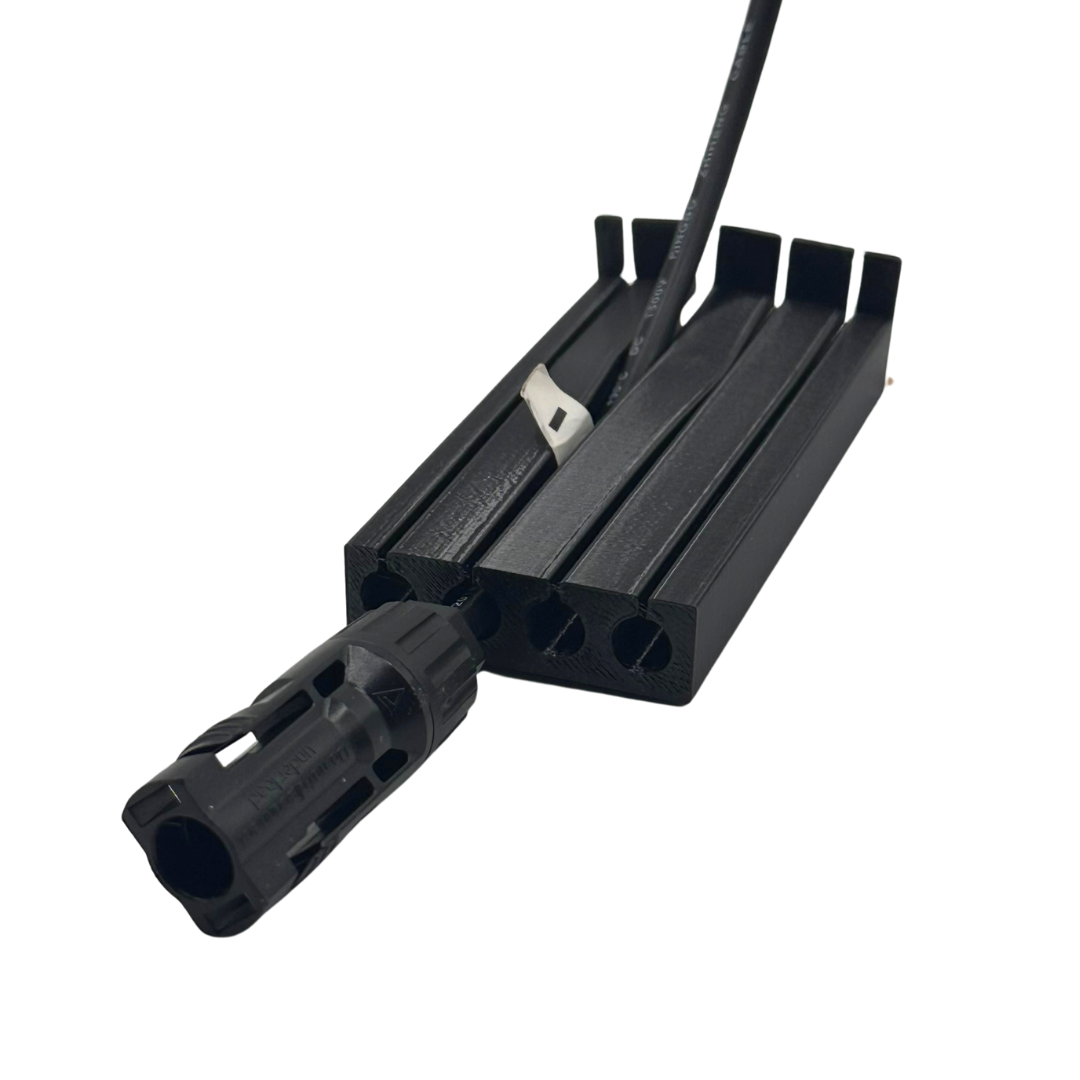
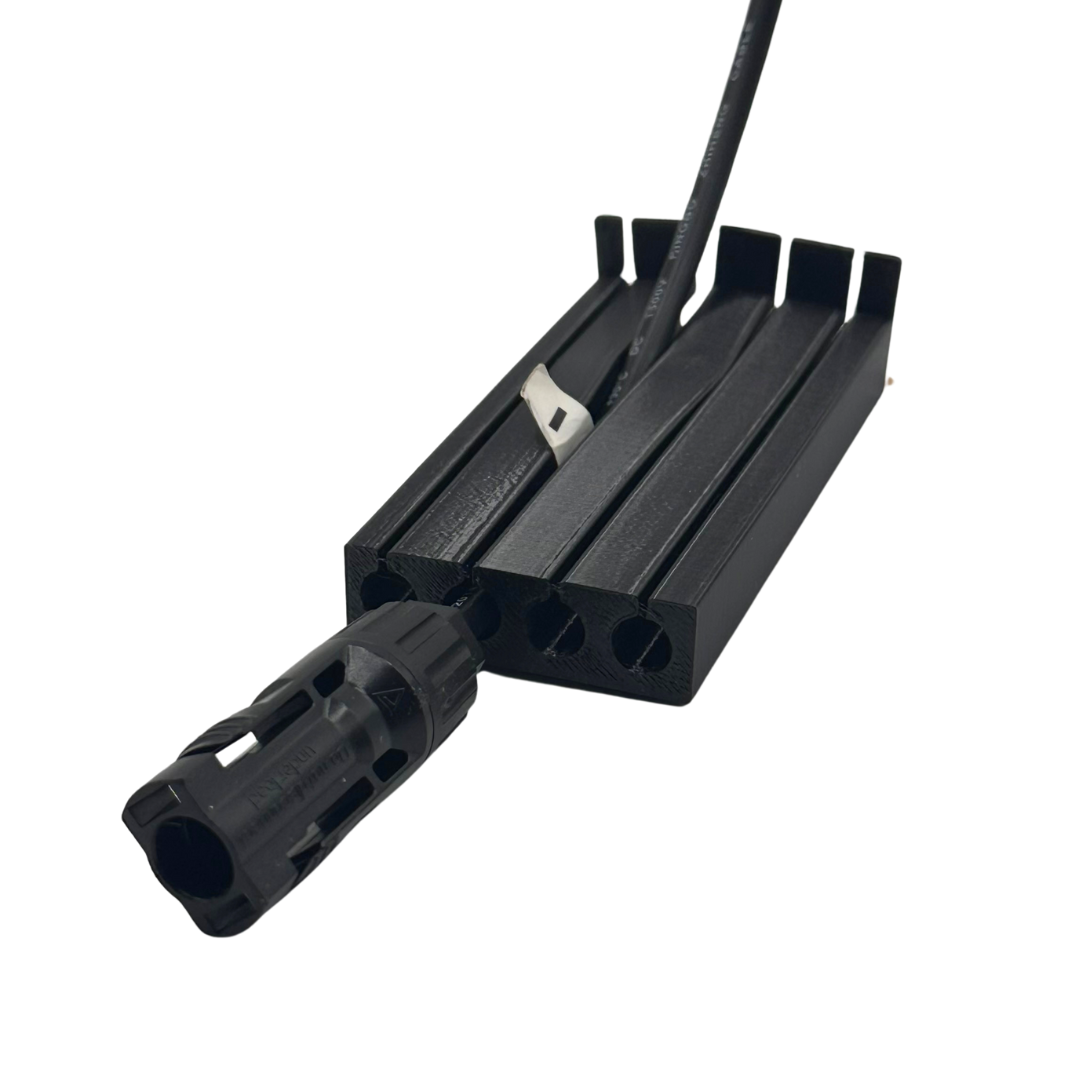
NEXCAPE Dachdurchführungen aus TPU (Thermoplastisches Polyurethan) sind wie geschaffen für Nachrüstungen. Die werkzeuglose Montage funktioniert so:
- Einen Dachziegel an der gewünschten Position entnehmen
- Die NEXCAPE Durchführung einsetzen
- PV-Kabel samt MC4-Steckern durchführen
- Kabel im Dachraum weiter zum Wechselrichter verlegen
Kein Bohren, kein Dichten, kein Werkzeug. Der Originalziegel wird aufbewahrt und kann bei einem späteren Rückbau wieder eingesetzt werden. Die MC4-Stecker müssen nicht getrennt werden.
Richtige Variante für die Nachrüstung wählen
Bei Nachrüstungen ist die Planung der String-Anzahl entscheidend:
| Variante | Einsatz |
|---|---|
| 2 PV / 2 PV+PE | Kleine Erweiterung, ein zusätzlicher String |
| 4 PV / 4 PV+PE | Standard-Nachrüstung, zwei Strings |
| 6 PV / 6 PV+PE | Große Erweiterung, drei Strings |
Tipp: Wählen Sie im Zweifel eine Variante mit mehr Öffnungen als aktuell nötig. So sind Sie für eine spätere Erweiterung vorbereitet. Die PE-Variante mit Erdungskabelöffnung ist besonders bei Nachrüstungen empfehlenswert, wenn der bestehende Potenzialausgleich erweitert werden muss.
Made in Germany — schnell verfügbar
Alle Durchführungen werden im 3D-Druck in Deutschland gefertigt, in den Längen 105, 125 und 150 mm. Für Installationsbetriebe gelten ab 20 Stück B2B-Mengenrabatte.
Nachrüst-Lösung für Ihr PV-Projekt finden: PV-Dachdurchführungen ansehen