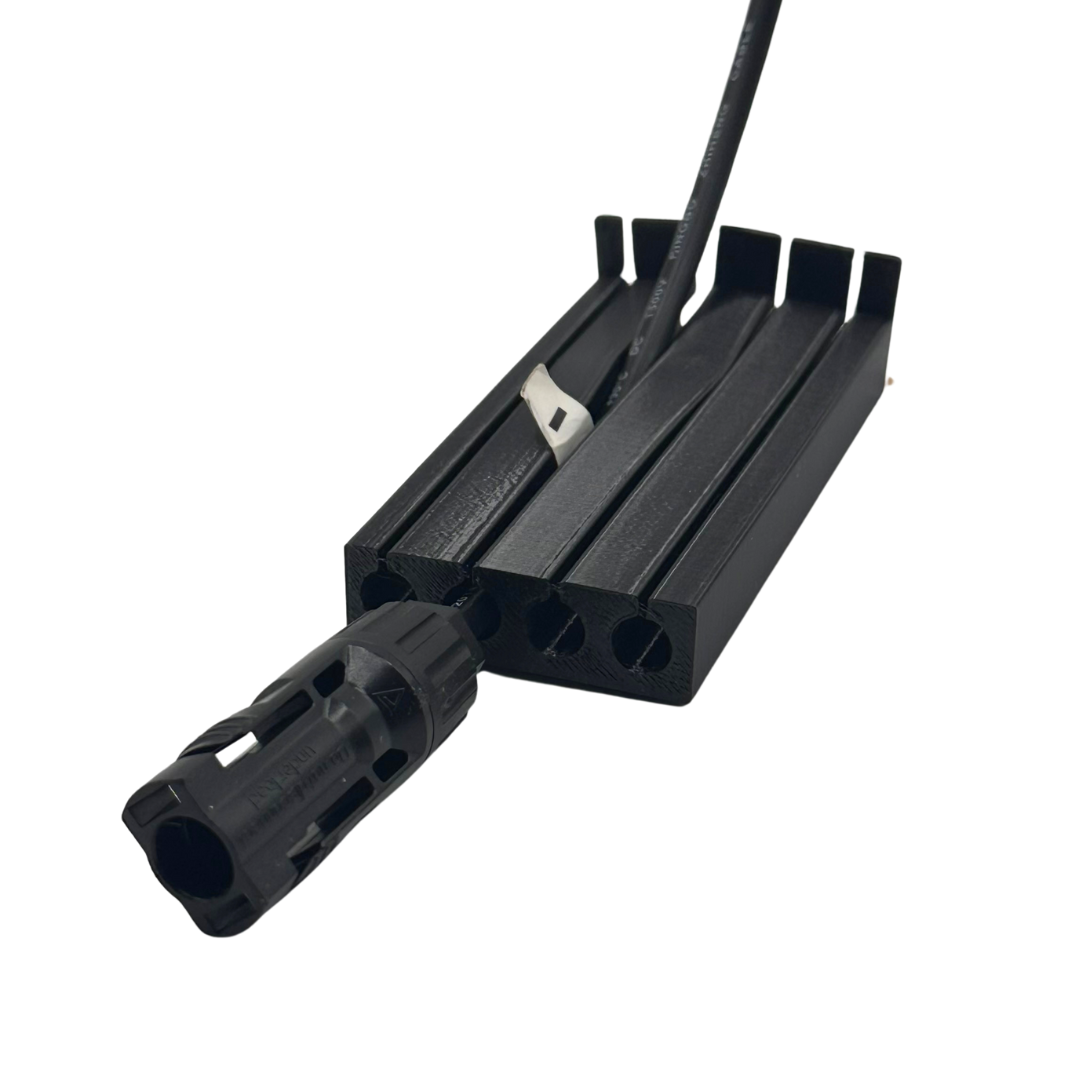
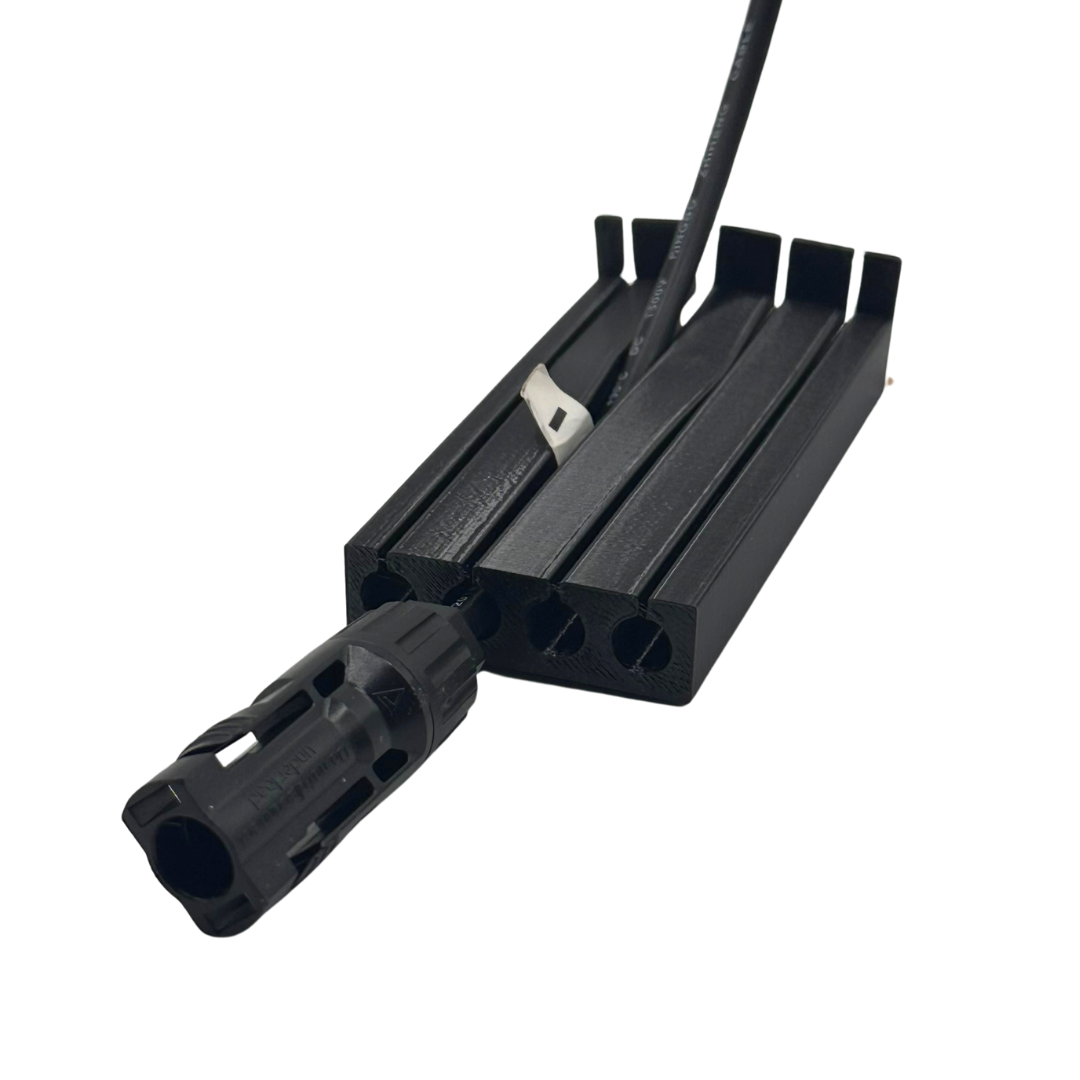
Kabeldurchführung für 2 vs. 4 vs. 6 Strings: Welche brauche ich?
Bei der Planung einer PV-Anlage stellt sich an der Dachdurchführung eine zentrale Frage: Wie viele Kabelöffnungen brauche ich? NEXCAPE bietet Durchführungen für 2, 4 und 6 PV-Strings an — jeweils mit oder ohne Erdungskabelöffnung. Dieser Leitfaden hilft bei der Auswahl.
Grundlage: Was ist ein String?
Ein String besteht aus mehreren in Reihe geschalteten PV-Modulen. Jeder String hat zwei Kabel: Plus und Minus. Eine Durchführung für "2 PV" hat also zwei Kabelöffnungen — passend für einen String (ein Plus- und ein Minuskabel).
| Variante | Kabelöffnungen | Strings |
|---|---|---|
| 2 PV | 2 | 1 String |
| 4 PV | 4 | 2 Strings |
| 6 PV | 6 | 3 Strings |
Wann welche Variante wählen?
2 PV — für kleine Anlagen
Die 2-PV-Variante eignet sich für Anlagen mit einem einzigen String auf einer Dachseite. Typisch für kleine Privatanlagen mit 4-8 Modulen in Reihe. Auch ideal als Ergänzung, wenn eine bestehende Anlage um einen einzelnen String erweitert wird.
4 PV — der Standard für Einfamilienhäuser
Zwei Strings sind der häufigste Fall bei Einfamilienhaus-Anlagen. Eine 4-PV-Durchführung deckt beide Strings über eine einzige Durchführungsstelle ab. Das spart einen zweiten Eingriff in die Dachfläche und beschleunigt die Montage.
6 PV — für größere Anlagen und Gewerbe
Bei Anlagen mit drei Strings pro Dachseite — typisch ab 15-20 Modulen oder bei gewerblichen Installationen — ist die 6-PV-Variante die richtige Wahl. Alle sechs Kabel werden über eine Durchführung geführt.
PE-Varianten: Mit Erdungskabelöffnung
Jede Variante gibt es auch als PE-Version mit einer zusätzlichen Öffnung für das Erdungskabel:
- 2 PV+PE — 1 String + Erdung
- 4 PV+PE — 2 Strings + Erdung
- 6 PV+PE — 3 Strings + Erdung
Die PE-Variante empfiehlt sich immer dann, wenn kein anderer Kabelweg für die Erdungsleitung vorhanden ist. Bei Nachrüstungen ist die PE-Variante fast immer die richtige Wahl.
Planungstipp: Lieber eine Nummer größer
Wenn absehbar ist, dass die Anlage in Zukunft erweitert werden könnte, wählen Sie eine Durchführung mit mehr Öffnungen als aktuell nötig. Freie Öffnungen können provisorisch verschlossen werden. Das ist deutlich einfacher als nachträglich eine zweite Durchführung zu setzen.
Material und Verfügbarkeit
Alle Varianten bestehen aus TPU (Thermoplastisches Polyurethan), gefertigt im 3D-Druck in Deutschland. Verfügbar in den Längen 105, 125 und 150 mm. Die Montage ist werkzeuglos — MC4-Stecker müssen nicht ausgebaut werden. B2B-Mengenrabatte ab 20 Stück.
Die passende Variante für Ihr Projekt finden: Dachdurchführungen für Solarkabel (105/125/150 mm)