Erdungskabel durch das Dach führen — Normen und Praxis
Die Erdung einer Photovoltaikanlage ist kein optionales Extra, sondern eine sicherheitstechnische Pflicht. Das Erdungskabel (PE — Protective Earth) muss vom Modulfeld auf dem Dach zum Potenzialausgleich im Gebäude geführt werden. Doch wie gelangt dieses Kabel sauber und normgerecht durch die Dachfläche?
Warum die Erdung so wichtig ist
Der Potenzialausgleich schützt bei Blitzeinschlag und Isolationsfehlern. Ohne ordnungsgemäße Erdung drohen:
- Gefährliche Berührungsspannungen an metallischen Teilen
- Schäden an Wechselrichtern und anderen Komponenten
- Erhöhtes Brandrisiko bei Isolationsfehlern
- Probleme bei der Abnahme durch den Elektriker
Normative Anforderungen
Die Erdung von PV-Anlagen wird unter anderem durch die DIN VDE 0100-712 und die DIN EN 62305 (Blitzschutz) geregelt. Wesentliche Anforderungen sind:
- Alle metallischen Teile der PV-Anlage müssen in den Potenzialausgleich einbezogen werden
- Die Erdungsleitung muss geschützt und dauerhaft verlegt werden
- Die Kabelführung darf die Dachdichtigkeit nicht beeinträchtigen
- Der Querschnitt des PE-Kabels muss den Normanforderungen entsprechen
Das Problem: Separate Durchführung für das Erdungskabel
In der Praxis wird das Erdungskabel häufig separat durch die Dachfläche geführt — durch ein zusätzliches Bohrloch, einen Lüftungsziegel oder entlang des Ortgangs. Das erzeugt zusätzliche Schwachstellen und bedeutet Mehraufwand bei der Montage.
Die Lösung: NEXCAPE PE-Varianten
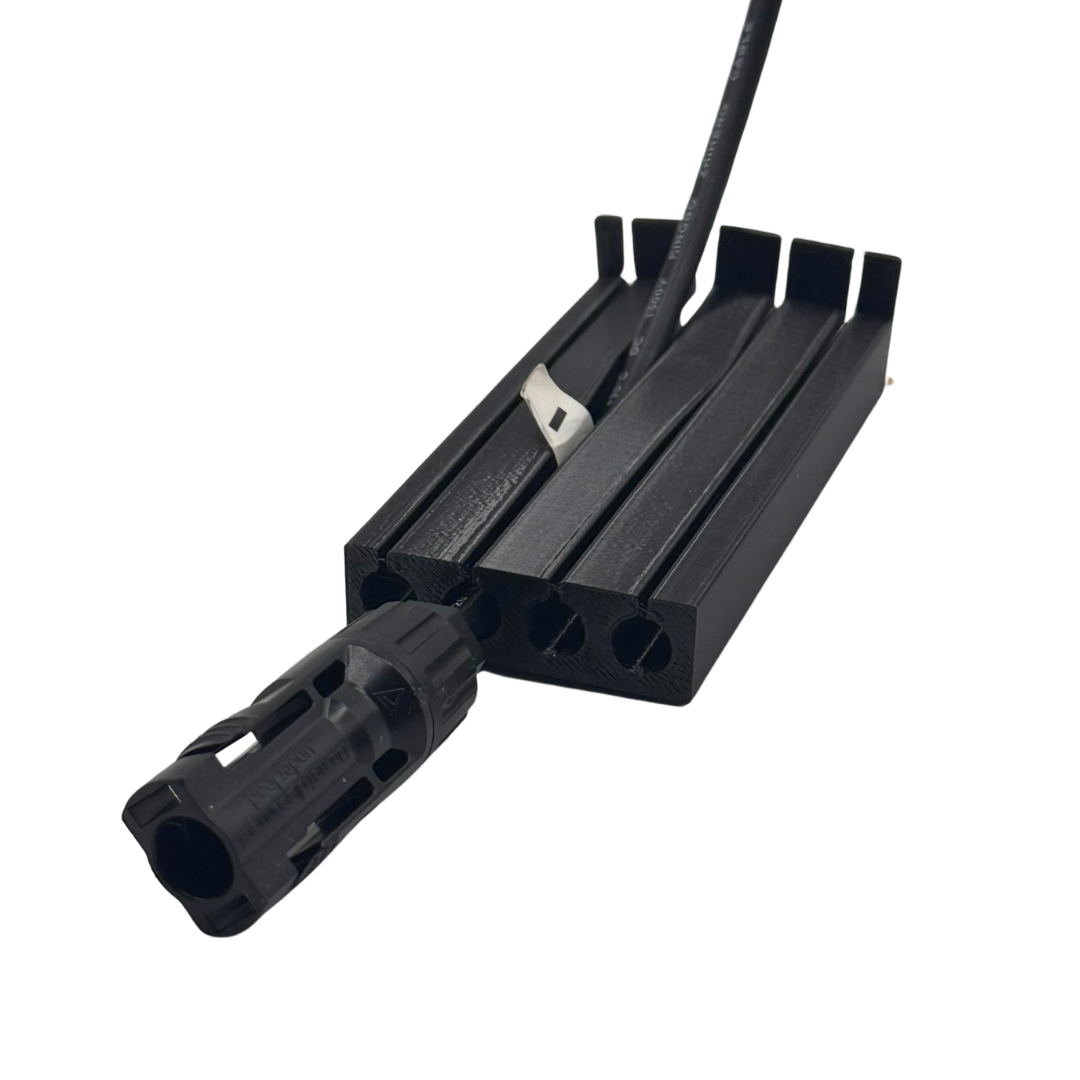
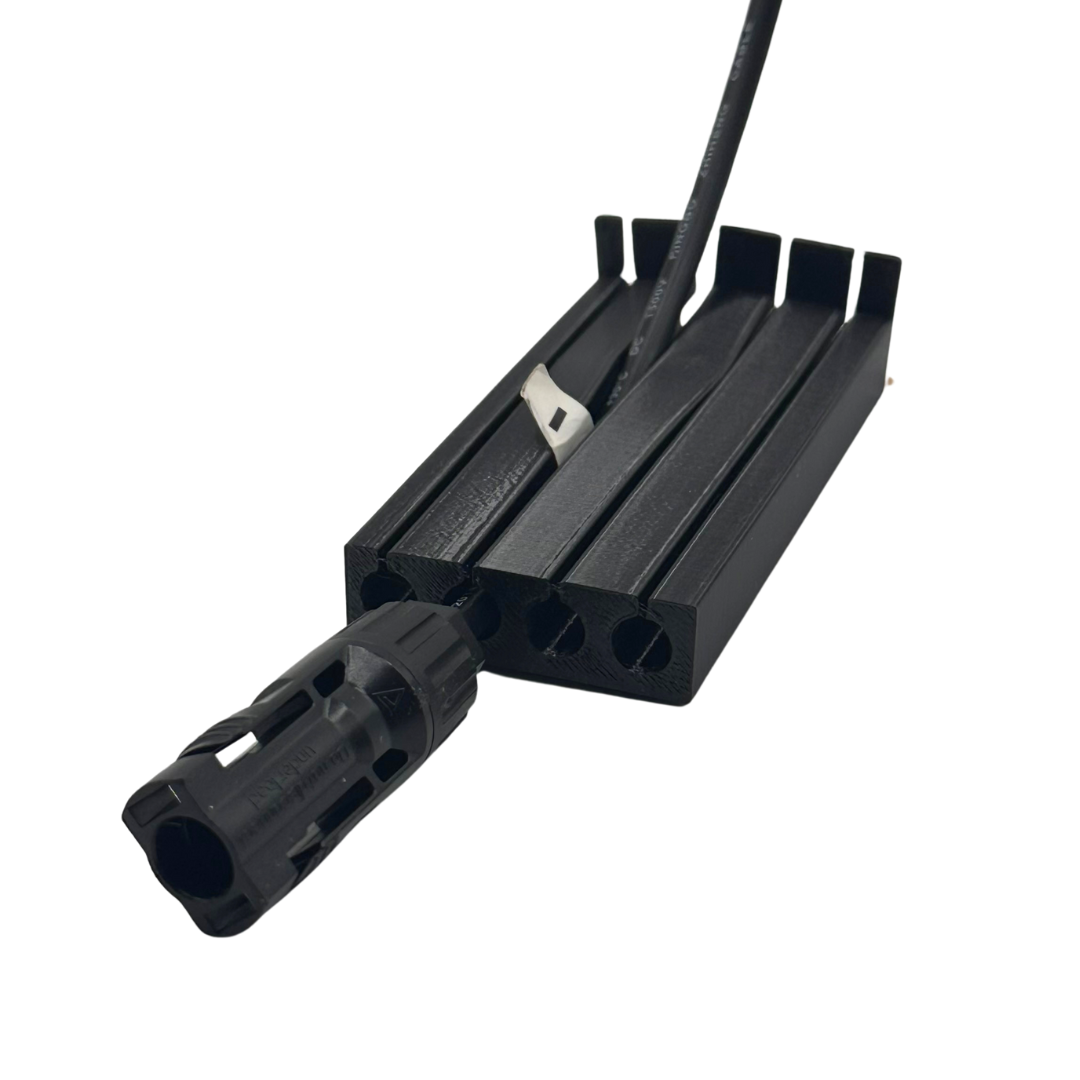
NEXCAPE bietet alle Dachdurchführungen in einer PE-Variante an. Diese verfügen über eine zusätzliche, separate Öffnung speziell für das Erdungskabel. So werden PV-Kabel und Erdungsleitung über eine einzige Durchführungsstelle sauber durch das Dach geführt.
Die verfügbaren PE-Varianten:
- 2 PV+PE — für kleine Anlagen mit einem String plus Erdung
- 4 PV+PE — für mittlere Anlagen mit zwei Strings plus Erdung
- 6 PV+PE — für größere Anlagen mit drei Strings plus Erdung
Material und Fertigung
Alle NEXCAPE Durchführungen bestehen aus TPU (Thermoplastisches Polyurethan), gefertigt im 3D-Druck in Deutschland. TPU ist UV-beständig, witterungsfest und flexibel genug, um sich an verschiedene Ziegelprofile anzupassen. Die Montage erfolgt werkzeuglos — ohne Bohren und ohne MC4-Stecker auszubauen.
Praxistipp für Solarteure
Planen Sie die Erdungsführung bereits bei der Anlagenplanung mit ein. Wählen Sie direkt die PE-Variante der Dachdurchführung, um nachträgliche Arbeiten zu vermeiden. Bei B2B-Bestellungen ab 20 Stück profitieren Sie von Mengenrabatten.
PE-Varianten der NEXCAPE Dachdurchführungen jetzt entdecken: PV-Kabel-Dachdurchführungen im Shop