PV-Kabelschutz: TPU vs. PVC vs. Gummi im Vergleich
Das Material einer Dachdurchführung entscheidet über Haltbarkeit, Flexibilität und Witterungsbeständigkeit. Für PV-Kabeldurchführungen kommen hauptsächlich drei Materialien infrage: TPU, PVC und Gummi (EPDM). Dieser Vergleich zeigt die Unterschiede und warum NEXCAPE auf TPU setzt.
Die drei Materialien im Überblick
| Eigenschaft | TPU | PVC | Gummi (EPDM) |
|---|---|---|---|
| UV-Beständigkeit | Sehr hoch | Mittel (vergilbt) | Hoch |
| Flexibilität | Sehr hoch | Gering bis mittel | Hoch |
| Temperaturbereich | -40 bis +80 °C | -10 bis +60 °C | -40 bis +120 °C |
| Alterungsbeständigkeit | Sehr hoch | Gering | Mittel |
| Mechanische Festigkeit | Hoch | Mittel | Mittel |
| 3D-Druck geeignet | Ja | Nein | Nein |
PVC: Günstig, aber nicht langlebig
PVC ist das am häufigsten verwendete Kunststoffmaterial für Bauzubehör. Es ist günstig in der Herstellung und weit verbreitet. Allerdings hat PVC im Außenbereich erhebliche Nachteile: Es wird unter UV-Strahlung spröde, vergilbt mit der Zeit und kann bei niedrigen Temperaturen brechen. Für eine Dachdurchführung, die 25 Jahre und länger halten soll, ist PVC keine optimale Wahl.
Gummi (EPDM): Bewährt, aber eingeschränkt
EPDM-Gummi kennt man von Flachdachabdichtungen. Es ist UV-beständig und flexibel, hat aber Grenzen bei der Formgebung. Komplexe Geometrien — wie sie für passgenau Dachdurchführungen nötig sind — lassen sich mit EPDM nur schwer realisieren. Zudem ist die mechanische Festigkeit geringer als bei TPU.
TPU: Das Beste aus beiden Welten
TPU (Thermoplastisches Polyurethan) vereint die Vorteile beider Materialien. Es ist hochflexibel wie Gummi, dabei aber mechanisch belastbarer und formstabiler. Die herausragende UV-Beständigkeit sorgt dafür, dass das Material auch nach Jahren auf dem Dach nicht spröde wird.
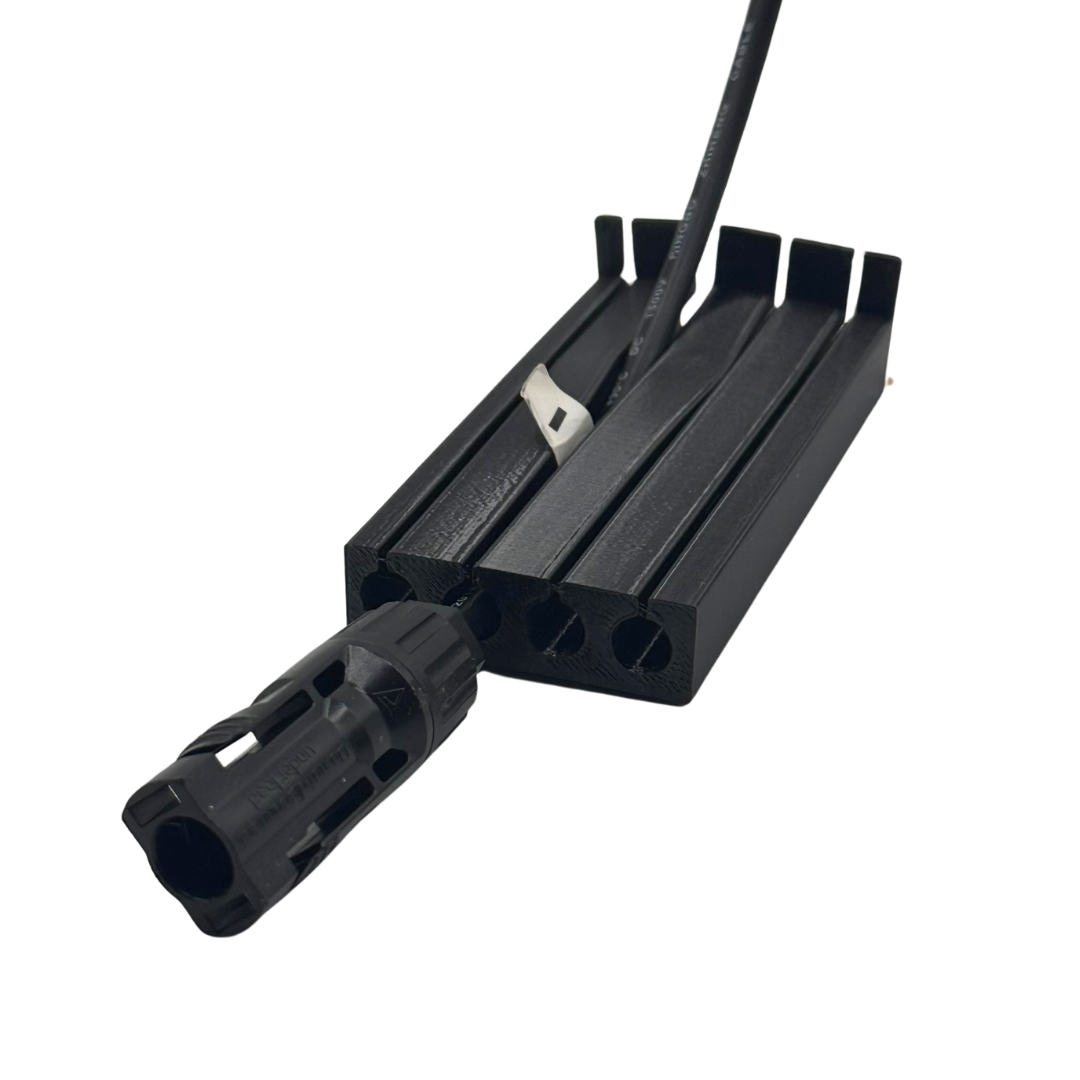
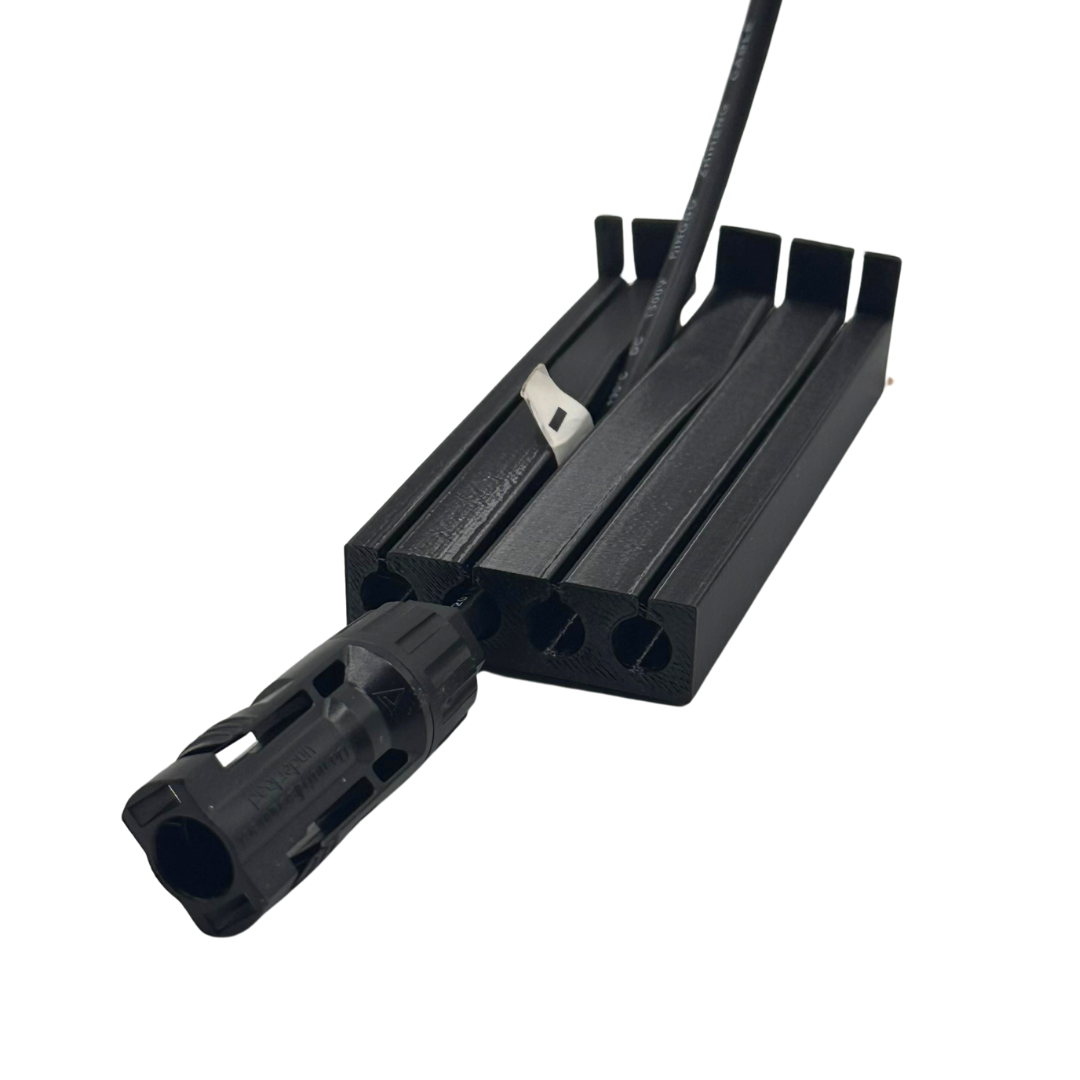
Ein entscheidender Vorteil: TPU eignet sich für den 3D-Druck. Das ermöglicht NEXCAPE, Durchführungen mit präzisen Geometrien zu fertigen, die perfekt auf verschiedene Ziegelprofile abgestimmt sind. Die Fertigung erfolgt in Deutschland.
Warum NEXCAPE auf TPU setzt
- Langlebigkeit: UV-beständig und alterungsfest für die gesamte Lebensdauer der PV-Anlage
- Flexibilität: Passt sich an verschiedene Ziegelprofile an
- Präzision: 3D-Druck ermöglicht exakte Kabelführungen für 2, 4 oder 6 Strings
- Werkzeuglose Montage: MC4-Stecker müssen nicht ausgebaut werden
Für Solarteure und Installationsbetriebe
NEXCAPE Dachdurchführungen gibt es in den Längen 105, 125 und 150 mm, jeweils mit und ohne PE-Kabelöffnung. Ab 20 Stück gelten B2B-Mengenrabatte.
TPU-Dachdurchführungen von NEXCAPE im Shop entdecken: zu den TPU-Dachdurchführungen für Solarkabel