Kabelmanagement auf dem Dach: Mehr als nur ordentlich verlegen
Die Befestigung der PV-Kabel auf dem Dach ist ein Arbeitsschritt, der in der Praxis oft zu wenig Beachtung findet. Dabei entscheidet die Kabelführung über Langlebigkeit, Sicherheit und Wartungsfreundlichkeit der gesamten Anlage. Lose Kabel scheuern, flattern im Wind und sind ein potenzielles Brandrisiko.
Anforderungen an die Kabelbefestigung
- UV-Beständigkeit: Alle Befestigungsmaterialien müssen dauerhaft UV-stabil sein
- Zugentlastung: Kabel dürfen nicht unter mechanischer Spannung stehen
- Trennung von Plus und Minus: Aus Brandschutzgründen getrennte Verlegung
- Biegeradius: Mindestbiegeradius des Kabels einhalten
- Keine scharfen Kanten: Scheuerstellen führen langfristig zu Isolationsschäden
Befestigungsmethoden im Vergleich
UV-beständige Kabelbinder
Die am häufigsten verwendete Methode. Schwarze Kabelbinder mit UV-Stabilisierung fixieren die Kabel an den Montageschienen. Vorteile: günstig, schnell, flexibel. Nachteil: Müssen regelmäßig auf Sprödigkeit kontrolliert werden.
Edelstahl-Kabelklemmen
Klemmen aus Edelstahl werden direkt an die Montageschienen geschraubt. Sie bieten eine dauerhafte, mechanisch belastbare Fixierung. Nachteil: Höherer Montageaufwand und Kosten.
Kabelkanäle unter den Modulen
Geschlossene Kabelkanäle bieten den besten Schutz vor UV, Wind und mechanischer Beschädigung. Sie eignen sich besonders für längere Kabelstrecken. Nachteil: Aufwendigere Montage und erschwerter Zugang für Wartung.
Klick-Clips für Montageschienen
Spezielle Clips, die in die Montageschiene einrasten und das Kabel halten. Schnelle Montage ohne Werkzeug. Nachteil: Nicht für alle Schienensysteme verfügbar.
Vom Dach durch das Dach: Der kritische Übergang
Die sauberste Kabelführung auf dem Dach nützt wenig, wenn die Durchführung ins Gebäudeinnere undicht ist. Am Übergang zwischen Dachoberfläche und Dachinnenseite braucht es eine professionelle Dachdurchführung, die Kabel sicher und wetterfest durch die Dachhaut leitet.
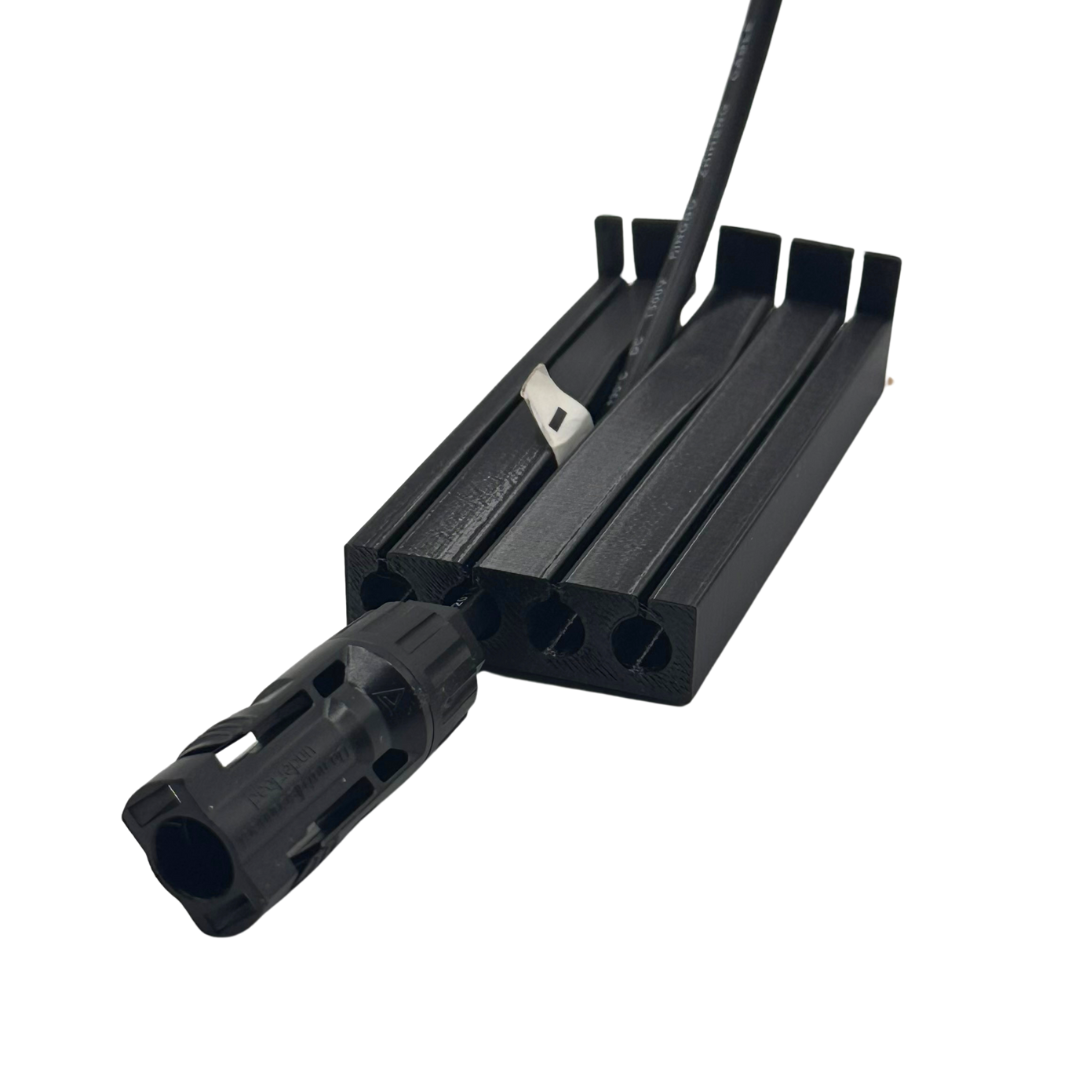
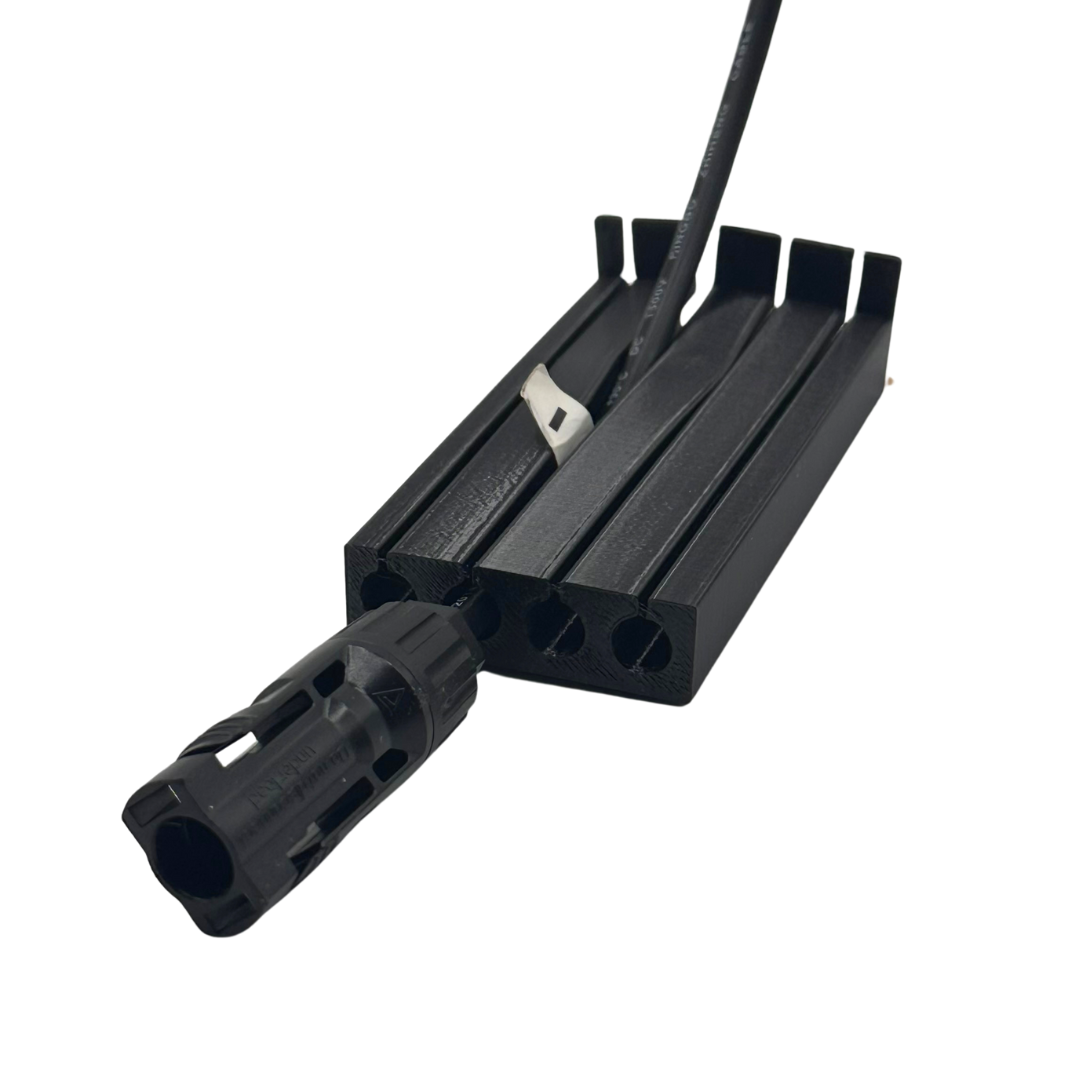
NEXCAPE Dachdurchführungen aus TPU (Thermoplastisches Polyurethan) schließen diesen kritischen Übergang zuverlässig. Das flexible, im 3D-Druck in Deutschland gefertigte Material passt sich an Ziegelprofile an. Die Kabel werden mitsamt MC4-Steckern durchgeschoben – werkzeuglos und ohne Steckerausbau.
Praxistipp: System durchdenken
Die beste Kabelbefestigung ist ein durchdachtes Gesamtsystem: Kurze Kabelwege auf dem Dach, feste Fixierung an den Schienen und eine professionelle Durchführung am Übergang. NEXCAPE Durchführungen sind in Varianten für 2, 4 und 6 PV-Kabel erhältlich – auch mit PE-Durchführung. Drei Längen (105, 125, 150 mm) decken alle gängigen Dachaufbauten ab.
Die Kabelführung komplett durchdacht – jetzt bestellen: passende PV-Dachdurchführung finden