Kondenswasser unter Dachziegeln: Unterschätztes Risiko für PV-Kabel
Kondenswasser bildet sich regelmäßig auf der Unterseite von Dachziegeln. Was bei der Dachkonstruktion meist eingeplant ist, wird für ungeschützte Solarkabel zum Problem. Besonders an Dachdurchführungen kann Feuchtigkeit langfristig Schäden verursachen.
Wie entsteht Kondenswasser am Dach?
Warme Luft aus dem Gebäudeinneren steigt auf und trifft auf die kalte Unterseite der Dachziegel. Dort kondensiert die Feuchtigkeit. Besonders in den Übergangsmonaten Herbst und Frühling tritt dieses Phänomen verstärkt auf. Die Wassertropfen sammeln sich und können entlang von Kabeln und Durchführungen ins Dachinnere laufen.
Gefahren für PV-Kabel
- Korrosion an Kontaktstellen: Selbst geringe Feuchtigkeit kann an MC4-Steckern oder Klemmen zu Korrosion führen.
- Kriechströme: Feuchtigkeit auf der Kabeloberfläche kann unerwünschte Kriechströme verursachen.
- Isolationsschäden: Dauerhaft feuchte Kabel altern schneller, die Isolation wird brüchig.
- Schimmelbildung: Im Bereich undichter Durchführungen kann sich auf Dämmmaterial Schimmel bilden.
Schutzmaßnahme: Geschützte Kabeldurchführung
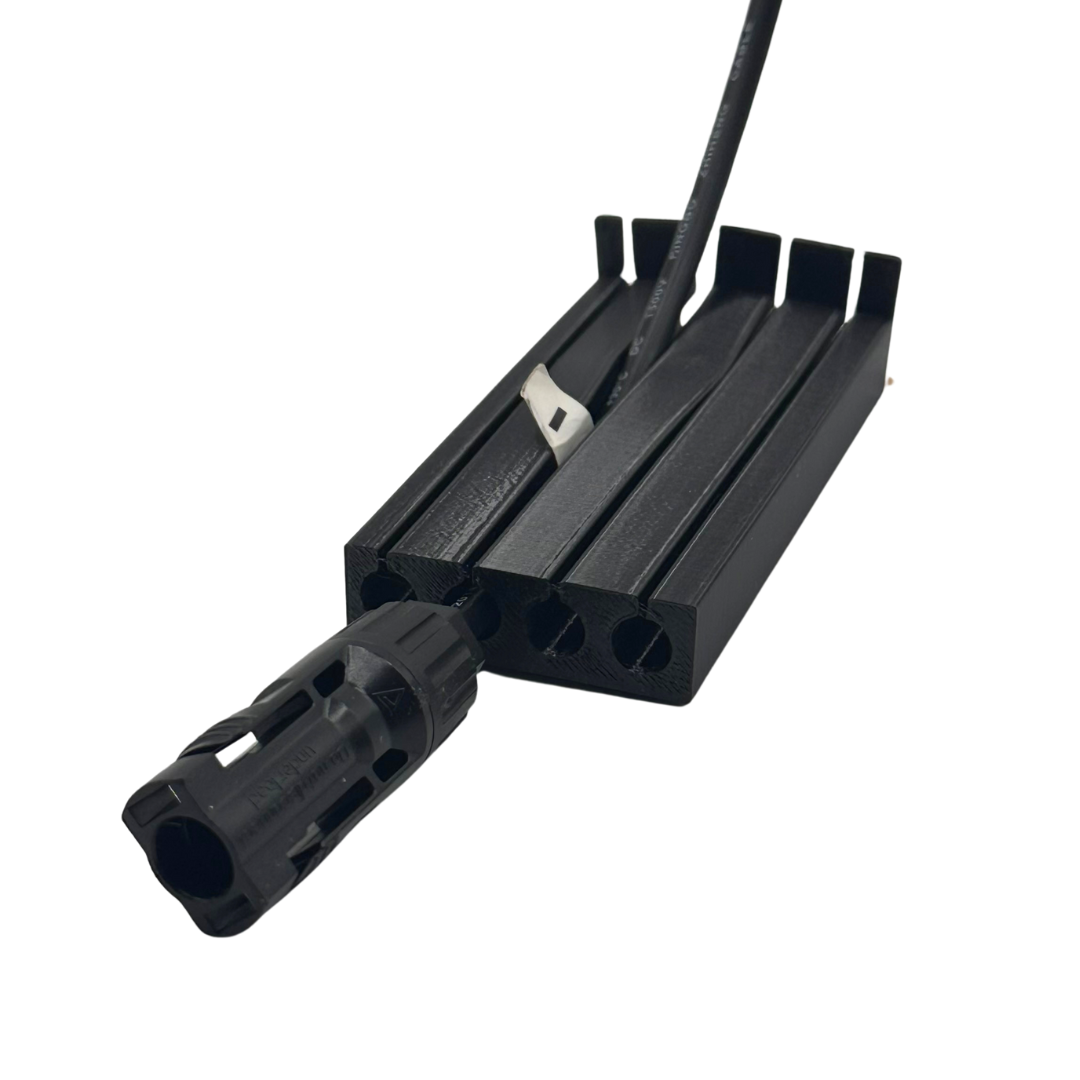
Die wichtigste Schutzmaßnahme ist eine fachgerecht eingesetzte Dachdurchführung, die das Kabel dauerhaft mechanisch schützt. NEXCAPE Durchführungen aus TPU (Thermoplastisches Polyurethan) schließen die Öffnung im Dach zuverlässig ab. Das elastische Material passt sich der Ziegeloberfläche an und verhindert, dass Kondenswasser entlang der Kabel nach innen gelangt.
Konstruktive Besonderheiten
Die NEXCAPE Durchführungen sind so gestaltet, dass die Kabelöffnungen eng anliegen, ohne die Kabel zu quetschen. Das verhindert Kapillareffekte, bei denen Wasser entlang der Kabeloberfläche in die Durchführung gezogen wird. Die werkzeuglose Montage ohne MC4-Ausbau stellt zudem sicher, dass die Steckerverbindungen nicht unnötig geöffnet werden.
Für jede Anlagengröße die passende Lösung
Von der kleinen Balkonkraftwerk-Ergänzung bis zur großen Dachanlage bietet NEXCAPE die passende Variante: 2 PV bis 6 PV, optional mit PE für die Erdung. Die Längen 105 mm, 125 mm und 150 mm decken alle gängigen Dachaufbauten ab. Gefertigt per 3D-Druck in Deutschland.
Kabelschutz beginnt bei der Durchführung: passende PV-Dachdurchführung finden