Warum der Potentialausgleich bei PV-Anlagen Pflicht ist
Der Potentialausgleich gehört zu den sicherheitsrelevanten Maßnahmen jeder Photovoltaikanlage. Er schützt Personen und Gebäude vor gefährlichen Berührungsspannungen und leitet Blitzströme sicher ab. Für Solarteure ist die korrekte Ausführung nicht optional, sondern normativ vorgeschrieben.
Normative Grundlagen
Die relevanten Normen für den Potentialausgleich bei PV-Anlagen umfassen:
- DIN VDE 0100-712: Errichtung von Niederspannungsanlagen – Photovoltaik-Stromversorgungssysteme
- DIN EN 62305 (VDE 0185-305): Blitzschutz
- DIN VDE 0100-540: Erdungsanlagen und Schutzleiter
Im Kern verlangen diese Normen, dass alle leitfähigen Teile der PV-Anlage – Modulrahmen, Montagegestell und ggf. Wechselrichtergehäuse – in den Potentialausgleich einbezogen werden.
Das Erdungskabel vom Dach ins Gebäude führen
Eine häufig unterschätzte Herausforderung: Das Erdungskabel (PE) muss vom Dach zur Potentialausgleichsschiene im Gebäude geführt werden. Dabei gelten die gleichen Anforderungen an die Dachdichtigkeit wie bei den DC-Kabeln.
Häufige Fehler bei der Erdungskabel-Durchführung
- Erdungskabel wird provisorisch neben den DC-Kabeln durch eine zu kleine Öffnung gepresst
- Separate Bohrung ohne Abdichtung wird als Behelfslösung genutzt
- Erdungskabel wird außen am Gebäude heruntergeführt, statt durch die Dachdurchführung
All diese Lösungen gefährden die Dachintegrität oder entsprechen nicht den anerkannten Regeln der Technik.
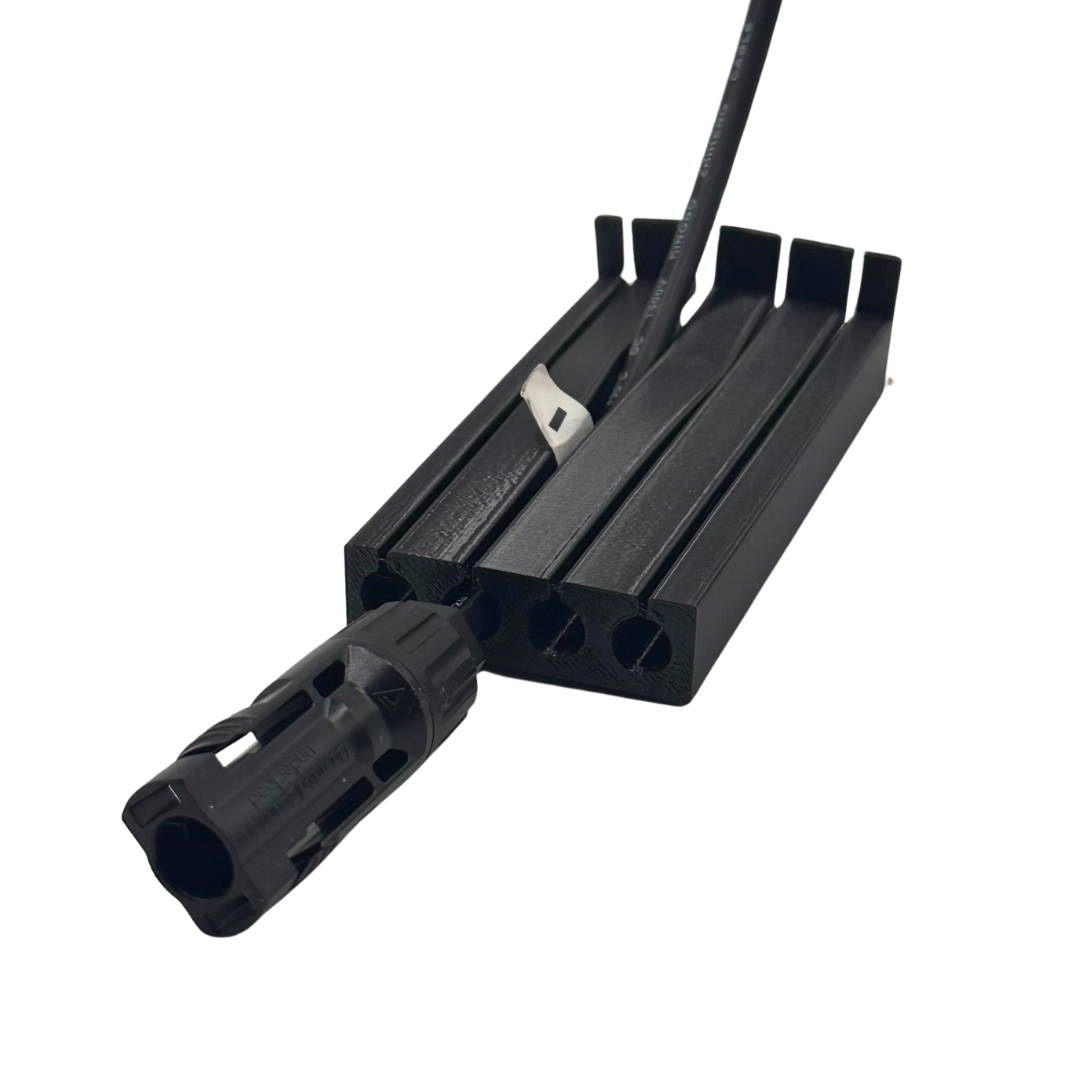
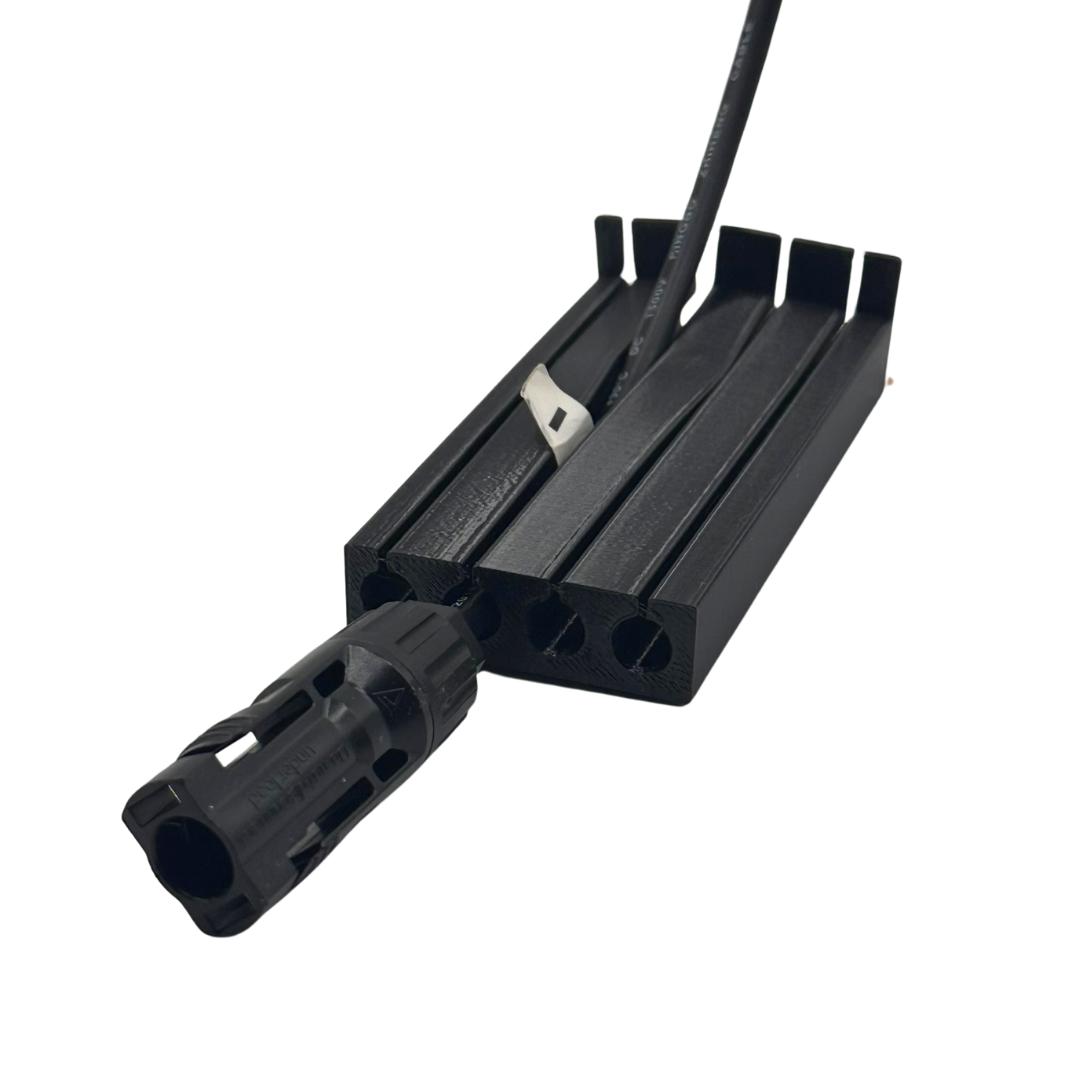
Die saubere Lösung: Dachdurchführung mit PE-Kanal
NEXCAPE bietet alle Dachdurchführungen in einer PE-Variante an. Diese enthält neben den PV-Kabelkanälen einen separaten Durchlass für das Erdungskabel. Verfügbare Konfigurationen:
- 2 PV+PE – 2 Solarkabel plus Erdung
- 4 PV+PE – 4 Solarkabel plus Erdung
- 6 PV+PE – 6 Solarkabel plus Erdung
Das Material TPU (Thermoplastisches Polyurethan) ist nicht leitfähig und sorgt für eine sichere Isolation zwischen den Kabeln. Die werkzeuglose Montage gilt auch für die PE-Varianten.
Querschnitte für den Potentialausgleich
| Anwendung | Mindestquerschnitt |
| Potentialausgleich Modulgestell | 6 mm² Cu |
| Hauptpotentialausgleich | 6 mm² Cu (mind.) |
| Äußerer Blitzschutz (wenn vorhanden) | 16 mm² Cu |
Die PE-Kanäle der NEXCAPE Durchführungen sind auf gängige Erdungskabel-Durchmesser abgestimmt.
Praxistipp: PE-Variante von Anfang an einplanen
Auch wenn bei der Erstinstallation nicht immer ein äußerer Blitzschutz vorhanden ist: Die PE-Variante kostet nur minimal mehr und bietet die Möglichkeit, den Potentialausgleich jederzeit nachzurüsten. Alle Varianten sind in den Längen 105 mm, 125 mm und 150 mm erhältlich.
Dachdurchführungen mit integriertem PE-Kanal bestellen: Dachdurchführungen für Solarkabel (105/125/150 mm)