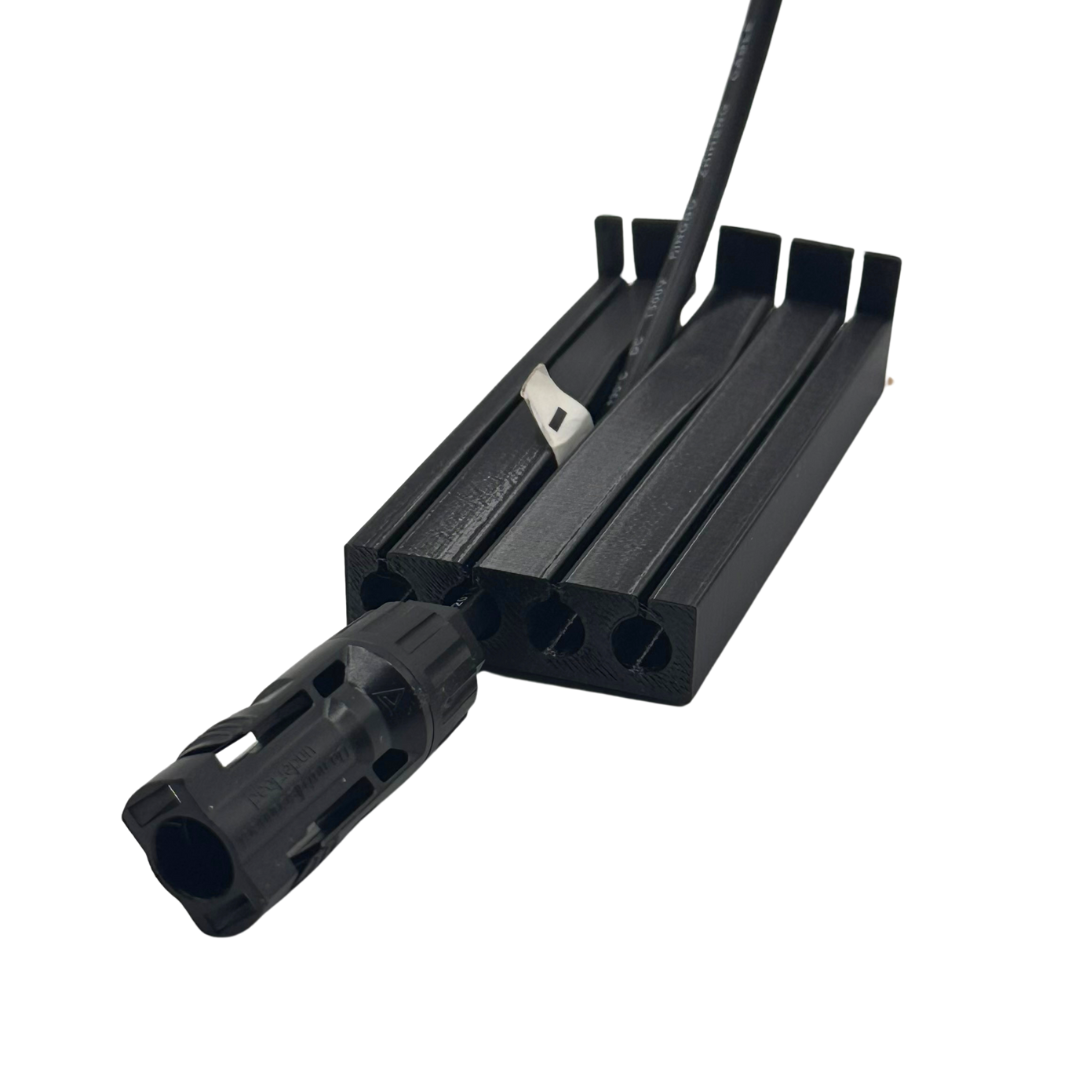
Additive Fertigung trifft Photovoltaik
3D-Druck hat in den letzten Jahren den Sprung von der Prototypenfertigung in die Serienproduktion geschafft. Auch in der Solarbranche eröffnet die additive Fertigung neue Möglichkeiten – besonders bei Komponenten, die bisher aus Standardteilen zusammengebastelt wurden. Ein Paradebeispiel: die Dachdurchführung für PV-Kabel.
Warum konventionelle Fertigung an Grenzen stößt
Herkömmliche Dachdurchführungen werden meist im Spritzgussverfahren aus EPDM oder Silikon hergestellt. Das hat Nachteile:
- Hohe Werkzeugkosten erfordern große Stückzahlen, um wirtschaftlich zu sein
- Anpassungen an neue Anforderungen dauern Monate
- Materialmix ist bei komplexen Geometrien begrenzt
- Varianten in kleinen Stückzahlen sind unwirtschaftlich
Für eine Branche, die sich rasant weiterentwickelt, ist das ein Problem. Neue Modulgrößen, veränderte Kabelquerschnitte oder zusätzliche Anforderungen an den Potentialausgleich erfordern flexible Fertigungsmethoden.
3D-Druck mit TPU: Das Beste aus zwei Welten
NEXCAPE setzt auf 3D-Druck mit TPU (Thermoplastisches Polyurethan). Dieses Verfahren vereint die Flexibilität additiver Fertigung mit den hervorragenden Materialeigenschaften von TPU:
- Hohe Elastizität: TPU bleibt dauerhaft flexibel und passt sich Ziegelkonturen an
- UV-Beständigkeit: Kein Verspröden durch Sonneneinstrahlung
- Chemische Beständigkeit: Resistent gegen Witterungseinflüsse
- Temperaturbereich: Funktioniert bei Hitze und Frost gleichermaßen
Vorteile des 3D-Druckverfahrens
| Aspekt | Spritzguss | 3D-Druck (NEXCAPE) |
| Werkzeugkosten | Hoch (5.000–50.000 €) | Keine |
| Variantenvielfalt | Begrenzt durch Werkzeuge | 6 Varianten problemlos produzierbar |
| Anpassungszeit | Wochen bis Monate | Tage |
| Mindestbestellmenge | Oft 1.000+ Stück | Ab 20 Stück (B2B) |
| Fertigung | Oft Fernost | Made in Germany |
Made in Germany: Kurze Wege, hohe Qualität
NEXCAPE fertigt seine Dachdurchführungen in Deutschland. Das bedeutet kurze Lieferwege, schnelle Verfügbarkeit und gleichbleibend hohe Qualitätsstandards. Für Solarteure hat das praktische Vorteile: Bestellungen werden zügig ausgeliefert, und bei Rückfragen steht ein deutschsprachiger Ansprechpartner bereit.
Sechs Varianten für jeden Bedarf
Dank 3D-Druck kann NEXCAPE ein breites Sortiment wirtschaftlich anbieten: Durchführungen für 2, 4 und 6 PV-Kabel, jeweils mit und ohne PE-Kanal für den Potentialausgleich. Alle Varianten gibt es in 105 mm, 125 mm und 150 mm Länge. Diese Vielfalt wäre mit konventionellen Werkzeugen kaum wirtschaftlich darstellbar.
Zukunft der Solarkomponenten
Der 3D-Druck wird in der Solarbranche weiter an Bedeutung gewinnen. Individualisierte Komponenten, schnelle Produktanpassungen und nachhaltige Fertigung ohne Überproduktion sind Vorteile, die perfekt zu einer innovativen Branche passen.
Erleben Sie den Unterschied – NEXCAPE Dachdurchführungen aus dem 3D-Drucker: PV-Kabel-Dachdurchführungen im Shop