Materialwahl bei PV-Dachdurchführungen: Mehr als nur Dichtigkeit
Eine Dachdurchführung für Photovoltaikkabel muss Jahrzehnte lang zuverlässig funktionieren – bei Hitze, Frost, UV-Strahlung und Starkregen. Das Material entscheidet darüber, ob die Durchführung nach 20 Jahren noch dicht ist oder längst zum Schwachpunkt der Installation geworden ist. Für Solarteure ist die Materialkenntnis deshalb kein Randthema, sondern geschäftskritisch.
Materialien im Vergleich
| Material | UV-Beständigkeit | Flexibilität | Gewicht | Montage |
|---|---|---|---|---|
| Blei | Sehr gut | Gut formbar | Schwer | Hammer nötig |
| EPDM | Gut | Mittel | Leicht | Einfach |
| Aluminium | Gut | Gering | Mittel | Werkzeug nötig |
| TPU | Sehr gut | Sehr hoch | Leicht | Werkzeuglos |
Blei: Traditionell, aber problematisch
Bleidurchführungen sind im Dachhandwerk seit Jahrzehnten bekannt. Sie lassen sich an Ziegelprofile anformen und sind extrem langlebig. Allerdings sprechen Umweltaspekte zunehmend gegen den Einsatz von Blei. Zudem ist das Material schwer und erfordert handwerkliches Anpassen auf dem Dach.
EPDM: Gummi mit Grenzen
EPDM-Manschetten (Ethylen-Propylen-Dien-Kautschuk) sind eine weit verbreitete Lösung. Sie sind leicht und kostengünstig. Nachteil: EPDM kann bei langjähriger UV-Exposition verhärten und an Elastizität verlieren. Bei stark profilierten Ziegeln ist die Anpassungsfähigkeit begrenzt.
Aluminium: Stabil, aber starr
Aluminium-Durchführungen bieten gute Korrosionsbeständigkeit und sind relativ leicht. Ihre Starrheit macht sie jedoch ungeeignet für Ziegel mit ausgeprägtem Profil. Spalten zwischen Durchführung und Ziegel müssen zusätzlich abgedichtet werden.
TPU: Das Beste aus zwei Welten
Thermoplastisches Polyurethan (TPU) vereint die Vorteile der genannten Materialien, ohne deren Nachteile mitzubringen. Es ist leicht wie EPDM, UV-beständig wie Blei und dabei hochflexibel. TPU passt sich an unterschiedliche Ziegelprofile an und behält seine Elastizität über die gesamte Lebensdauer.
- UV-beständig – kein Verspröden über die Jahre
- Temperaturbeständig von minus 40 bis plus 80 Grad Celsius
- Chemisch resistent gegen Umwelteinflüsse
- Leicht und werkzeuglos montierbar
NEXCAPE: TPU-Durchführungen aus dem 3D-Drucker
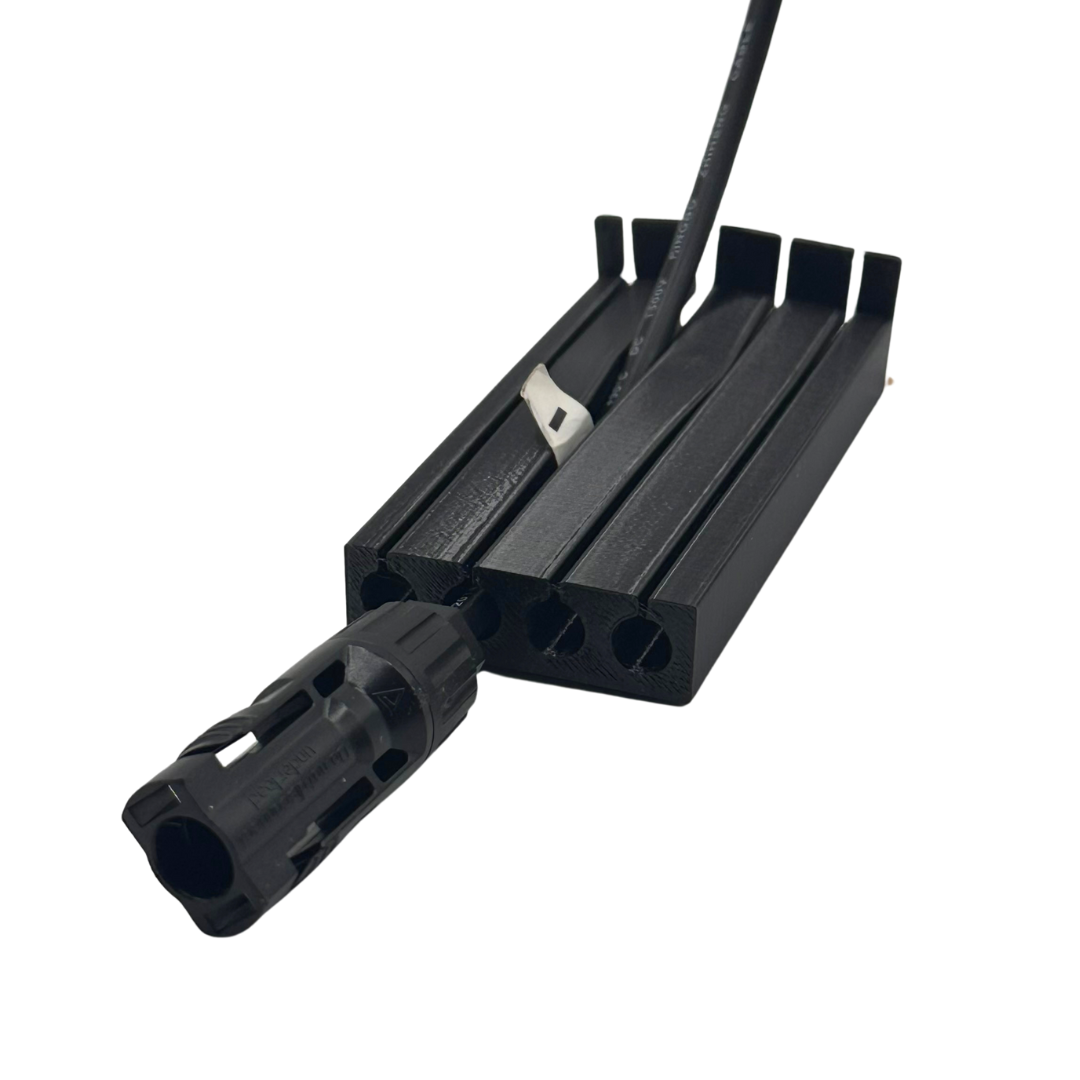
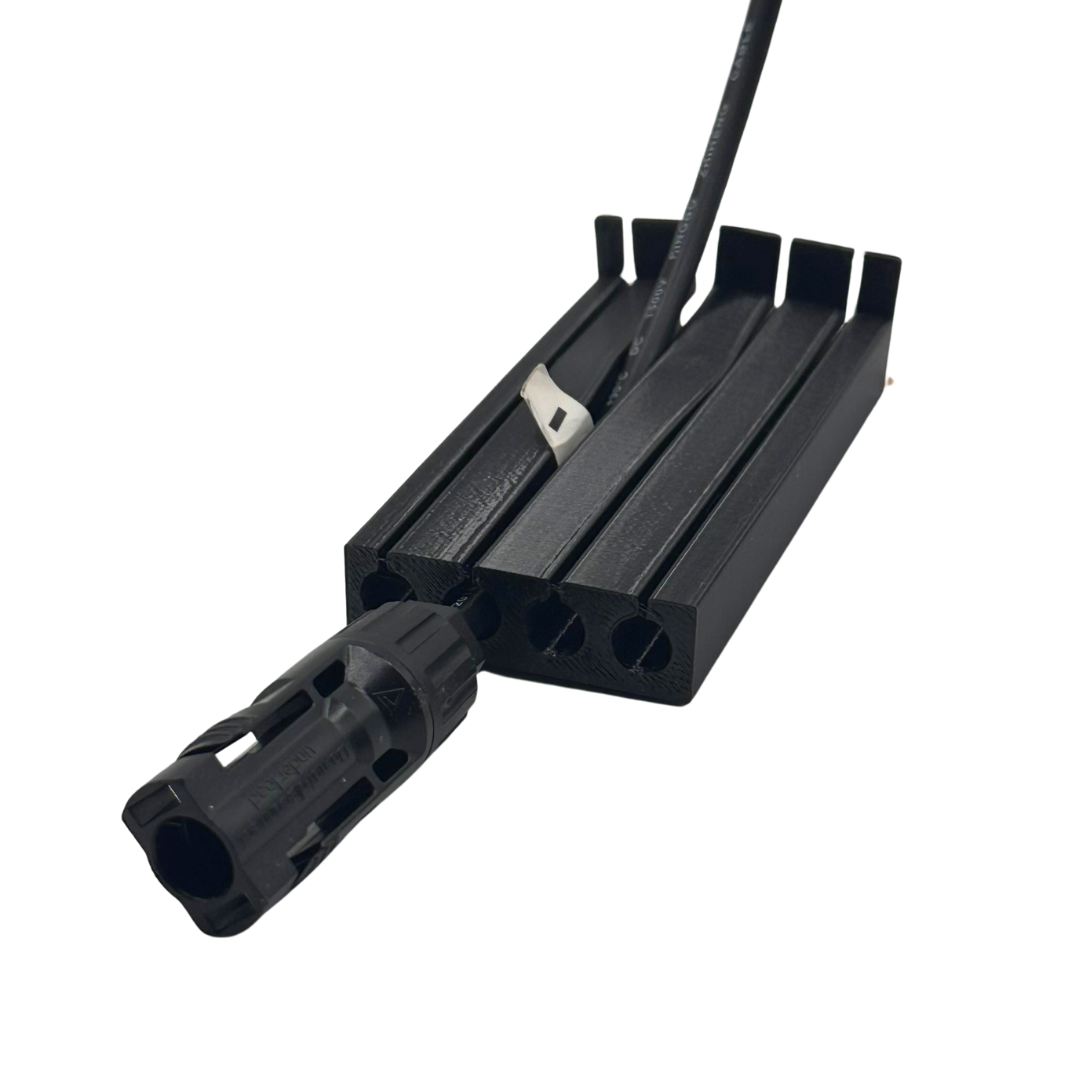
NEXCAPE setzt konsequent auf TPU als Material für PV-Dachdurchführungen. Die Fertigung erfolgt per 3D-Druck in Deutschland. Das Ergebnis: passgenaue, flexible Durchführungen, die ohne Werkzeug montiert werden. Die PV-Kabel werden einfach durchgeschoben – ein MC4-Ausbau ist nicht nötig. Erhältlich in den Varianten 2, 4 und 6 PV-Kabel, jeweils optional mit PE-Durchführung, und in drei Längen (105, 125, 150 mm).
TPU-Dachdurchführungen im Shop entdecken: passende PV-Dachdurchführung finden