Regensicherheit: Mehr als nur dicht
Wenn ein Dach als regensicher gilt, bedeutet das nicht, dass kein einziger Tropfen Wasser eindringt. Regensicherheit nach den anerkannten Regeln der Technik beschreibt vielmehr, dass die Dachkonstruktion Niederschlagswasser zuverlässig nach außen ableitet – auch bei Winddruck und Schlagregen. Für Dachdurchführungen bei PV-Anlagen ist dieses Konzept besonders relevant.
DIN 4108: Was sie regelt
Die DIN 4108 befasst sich mit dem Wärmeschutz und der Energieeinsparung in Gebäuden. Teil 3 dieser Norm behandelt den klimabedingten Feuchteschutz und definiert Anforderungen an die Gebäudehülle, einschließlich des Daches. Zusätzlich relevant sind:
- Fachregeln des ZVDH: Das Zentralverband des Deutschen Dachdeckerhandwerks definiert, was als regensicheres Unterdach gilt
- DIN EN 14963: Durchgehende Dachlichtbänder und Dachdurchführungen
- Herstellervorgaben: Ergänzende Angaben der Ziegelhersteller zur Mindestüberdeckung
Anforderungen an PV-Dachdurchführungen
Eine Dachdurchführung für PV-Kabel muss folgende Kriterien erfüllen, um die Regensicherheit nicht zu beeinträchtigen:
- Ausreichende Überdeckung: Der darüberliegende Ziegel muss die Durchführung vollständig überdecken
- Wasserführung: Regenwasser muss über die Durchführung hinweggeleitet werden, ohne in die Konstruktion einzudringen
- Dichtigkeit der Kabeldurchtritte: Die Öffnungen für die Kabel müssen so gestaltet sein, dass kein Wasser eindringt
- Dauerhafte Beständigkeit: Das Material darf durch UV-Strahlung und Witterung nicht verspröden
Wie die NEXCAPE-Durchführung die Eindeckung intakt lässt
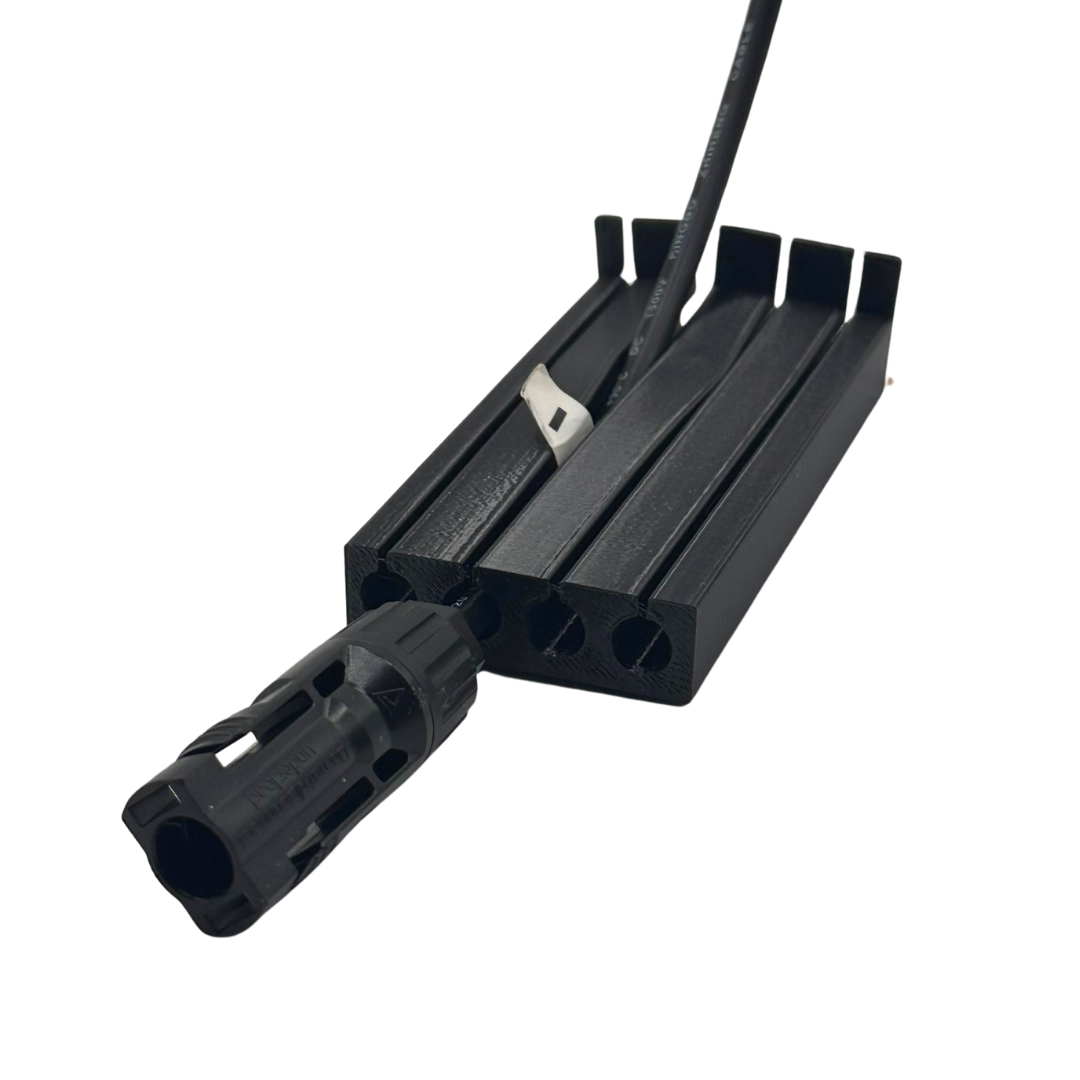
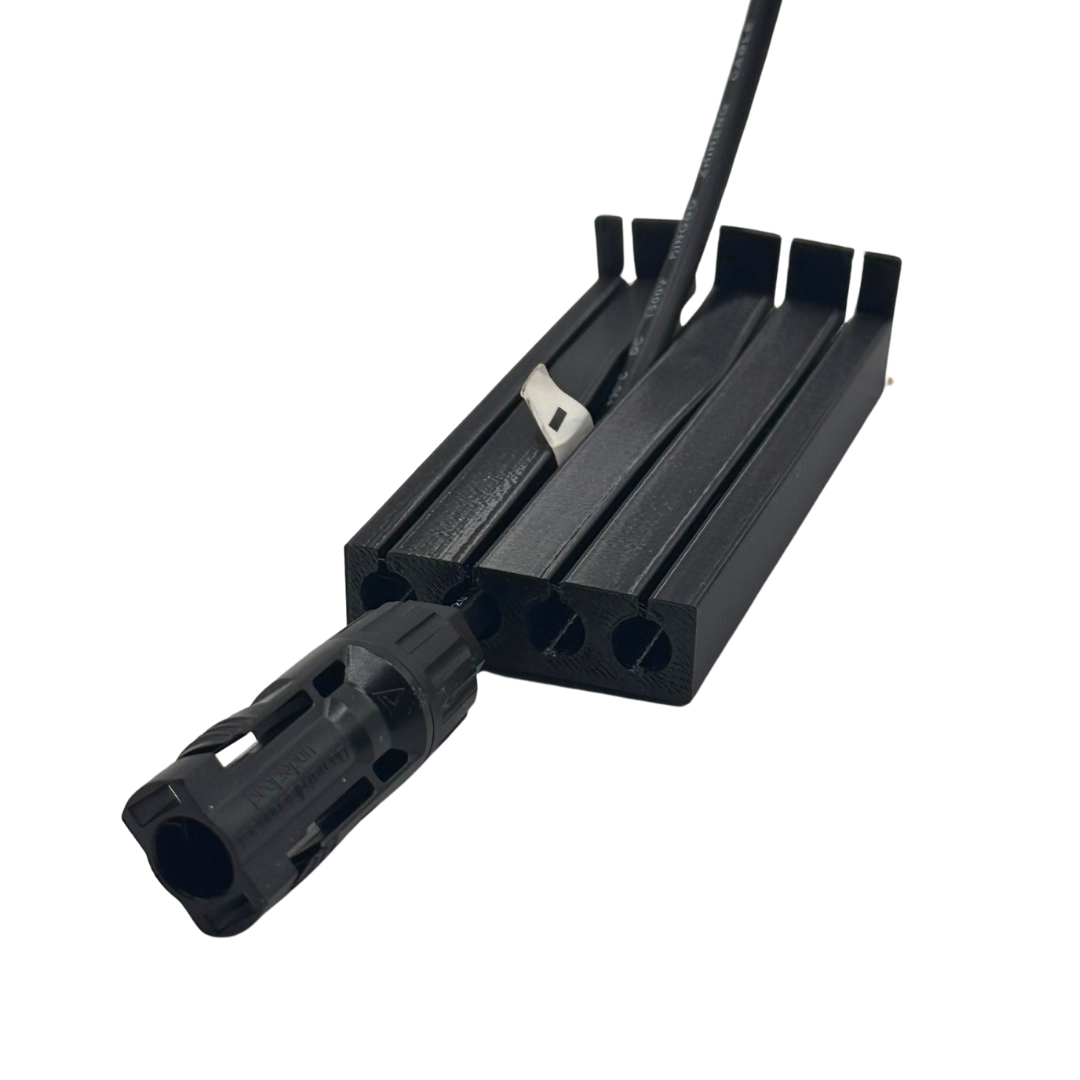
NEXCAPE Dachdurchführungen sind so konstruiert, dass sie sich in die bestehende Ziegeldeckung einfügen. Wichtige Konstruktionsmerkmale:
Materialwahl: TPU
TPU (Thermoplastisches Polyurethan) ist UV-beständig und flexibel. Im Gegensatz zu starren Materialien passt sich TPU der Ziegelkontur an und liegt scheuerfrei am Solarkabel an, ohne die Ziegel anzuheben. So bleibt die Eindeckung ungestört, die für die Regensicherheit sorgt.
Drei Längen für korrekte Überdeckung
Die richtige Länge sorgt dafür, dass der darüberliegende Ziegel die Durchführung vollständig abdeckt – so bleibt die Eindeckung wirksam:
| Länge | Empfehlung |
| 105 mm | Kleinformatige Ziegel mit geringer Deckbreite |
| 125 mm | Standardziegel, häufigste Wahl |
| 150 mm | Großformatige Ziegel, maximale Überdeckung |
Werkzeuglose Montage ohne Ziegelbearbeitung
Ein wesentlicher Vorteil: Die NEXCAPE Durchführungen erfordern kein Bohren oder Schneiden von Ziegeln. Jede Bearbeitung am Ziegel ist ein potenzieller Schwachpunkt für die Regensicherheit. Da die Durchführung werkzeuglos zwischen die Ziegel gelegt wird, bleibt die Dachdeckung intakt.
Praxistipp: Dokumentation nicht vergessen
Professionelle Solarteure dokumentieren die korrekte Montage der Dachdurchführung fotografisch. Das dient als Nachweis gegenüber dem Auftraggeber und schützt bei späteren Reklamationen.
PV-Dachdurchführungen (TPU-Abriebschutz) für Ihre Projekte: passende PV-Dachdurchführung finden