Warum Kabelschutz bei Aufdach-Anlagen so wichtig ist
Bei Aufdach-PV-Anlagen liegen die Kabel offen auf dem Dach – exponiert gegenüber UV-Strahlung, Witterung und mechanischen Einwirkungen. Beschädigte Kabel sind nicht nur ein Sicherheitsrisiko, sondern auch eine häufige Ursache für Ertragseinbußen und teure Nachbesserungen. Professioneller Kabelschutz beginnt bei der Verlegung und endet bei der Dachdurchführung.
Die häufigsten Gefahren für PV-Kabel auf dem Dach
UV-Strahlung
Obwohl PV-Kabel grundsätzlich UV-beständig sind, verkürzt dauerhafte Sonneneinstrahlung die Lebensdauer der Isolierung. Besonders gefährdet sind Stellen, an denen Kabel nicht durch Module oder Ziegel geschützt werden.
Scheuerstellen
Wind bewegt die Kabel minimal hin und her. An Kontaktpunkten mit Ziegeln, Blechkanten oder Montagegestell entsteht über Jahre eine Scheuerwirkung. Das Ergebnis: durchgescheuerte Isolierung bis hin zum blanken Leiter.
Marderbiss
Marder nutzen den Hohlraum unter PV-Modulen gerne als Unterschlupf. Dabei beißen sie in Kabel – ein Problem, das häufiger vorkommt, als viele Installateure vermuten.
Witterung und Temperaturschwankungen
Frost, Hitze und Feuchtigkeit beanspruchen die Kabelisolierung. Besonders die Übergangspunkte – etwa an der Dachdurchführung – sind anfällig, wenn ungeeignete Materialien verwendet werden.
Best Practices für den Kabelschutz
- Kabelkanäle oder Wellrohre verwenden: Offenliegende Strecken mit UV-beständigen Kabelkanälen schützen
- Biegeradien einhalten: Mindestbiegeradius gemäß Herstellerangabe beachten, um Kabelbruch zu vermeiden
- Kabel fixieren: Regelmäßige Befestigungspunkte verhindern Bewegung und Scheuern
- Kontakt mit scharfen Kanten vermeiden: Schutzschläuche oder Kantenschutz an Berührungspunkten einsetzen
- Marderschutz anbringen: Spezielle Gitter an den Modulrändern verhindern den Zugang
Die Dachdurchführung als kritischer Punkt
Der Übergang vom Dach ins Gebäudeinnere ist die verletzlichste Stelle der Kabelführung. Hier treffen mehrere Anforderungen zusammen: Dichtigkeit, Kabelschutz und mechanische Belastung.
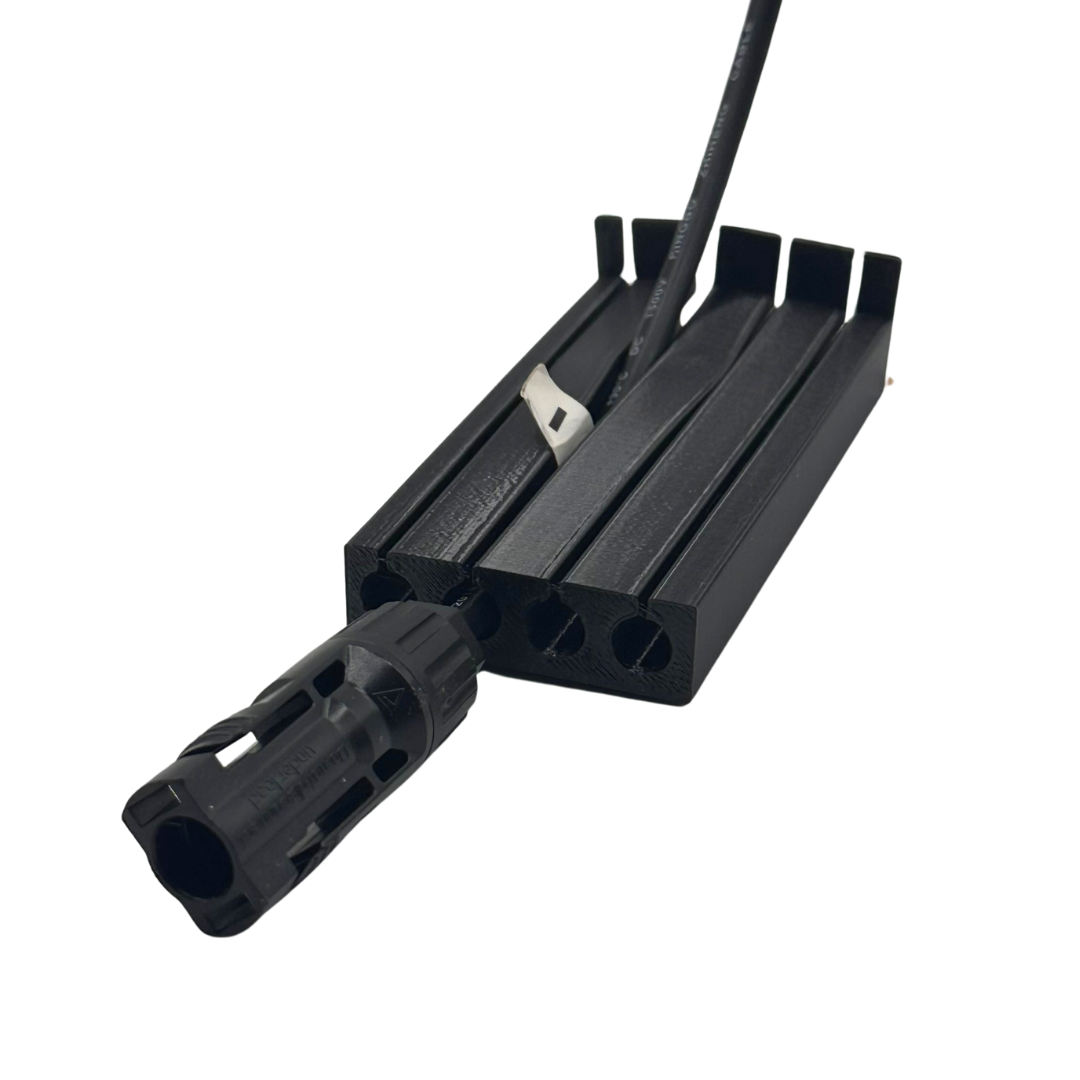
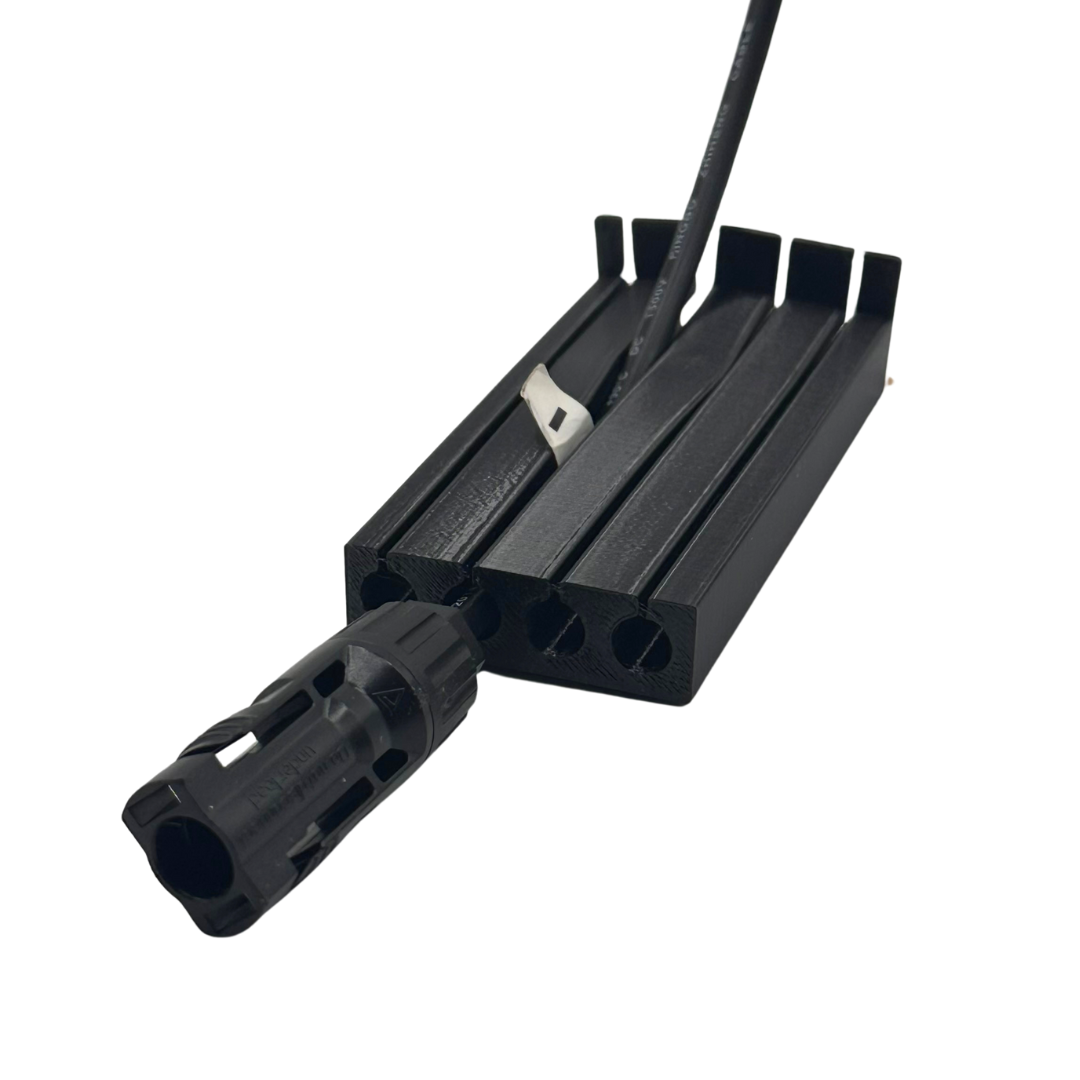
NEXCAPE Dachdurchführungen aus TPU (Thermoplastisches Polyurethan) lösen dieses Problem gleich mehrfach:
- UV-beständiges Material: Kein Verspröden an der exponierten Durchführungsstelle
- Flexibles TPU: Kein Scheuern der Kabel an harten Kanten
- Kein MC4-Ausbau nötig: Die Stecker bleiben intakt, was die Kabelintegrität schützt
- Werkzeuglose Montage: Kein Bohren, das scharfe Kanten erzeugen könnte
Regelmäßige Kontrolle einplanen
Professionelle Solarteure empfehlen eine jährliche Sichtkontrolle der Kabelführung. Dabei sollte besonders auf Scheuerstellen, verfärbte Isolierungen und Tierbissspuren geachtet werden. Alle NEXCAPE Varianten – für 2, 4 und 6 PV-Kabel mit optionalem PE-Kanal – sind in den Längen 105 mm, 125 mm und 150 mm verfügbar.
Kabelschutz beginnt bei der richtigen Dachdurchführung: Dachdurchführungen für Solarkabel (105/125/150 mm)